Hazeltine National Golf Club
1900 Hazeltine Blvd, Chaska, MN 55318Designed by Robert Trent Jones Sr. · Est. 1962
Redesigned by Rees Jones (2001)
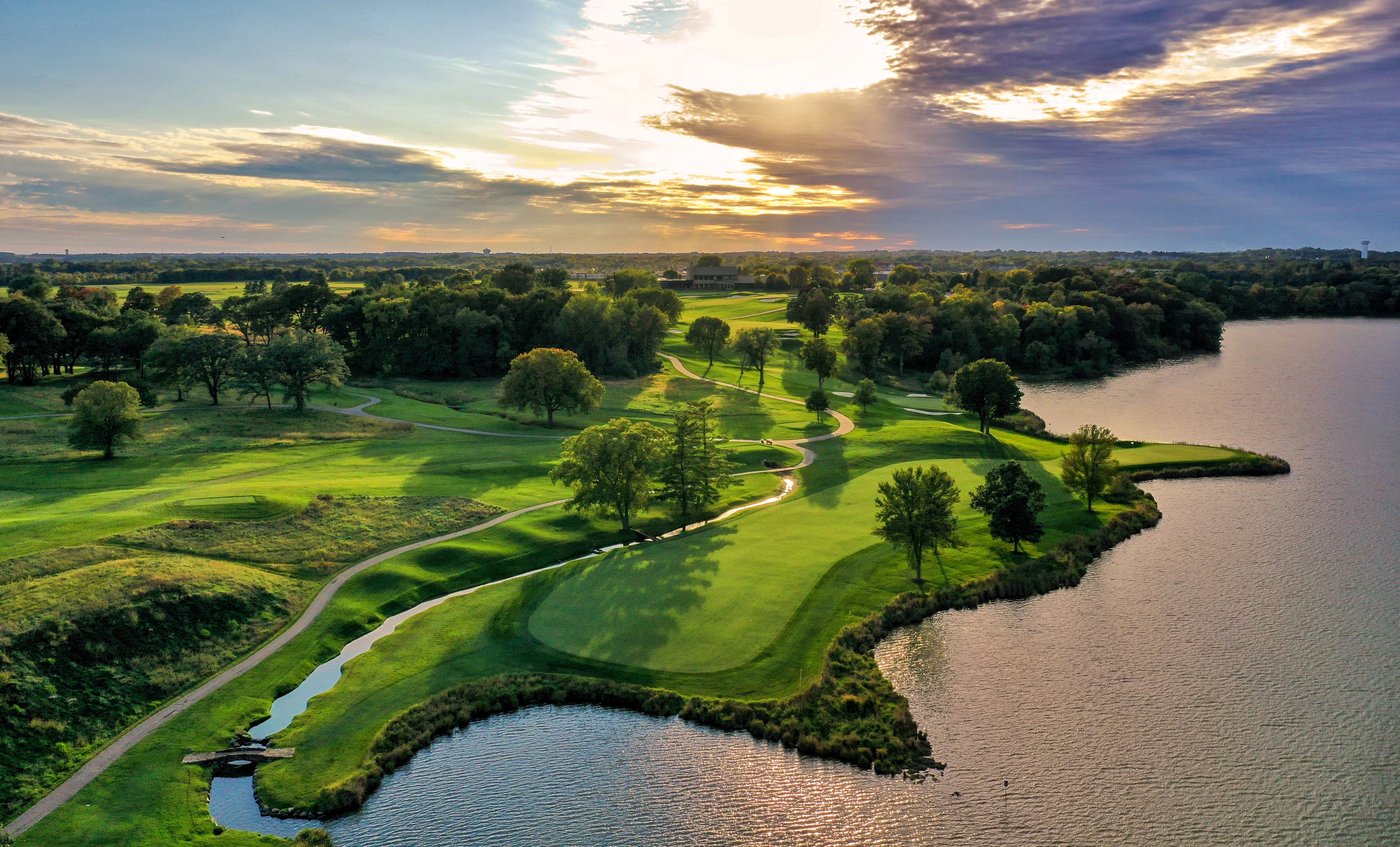
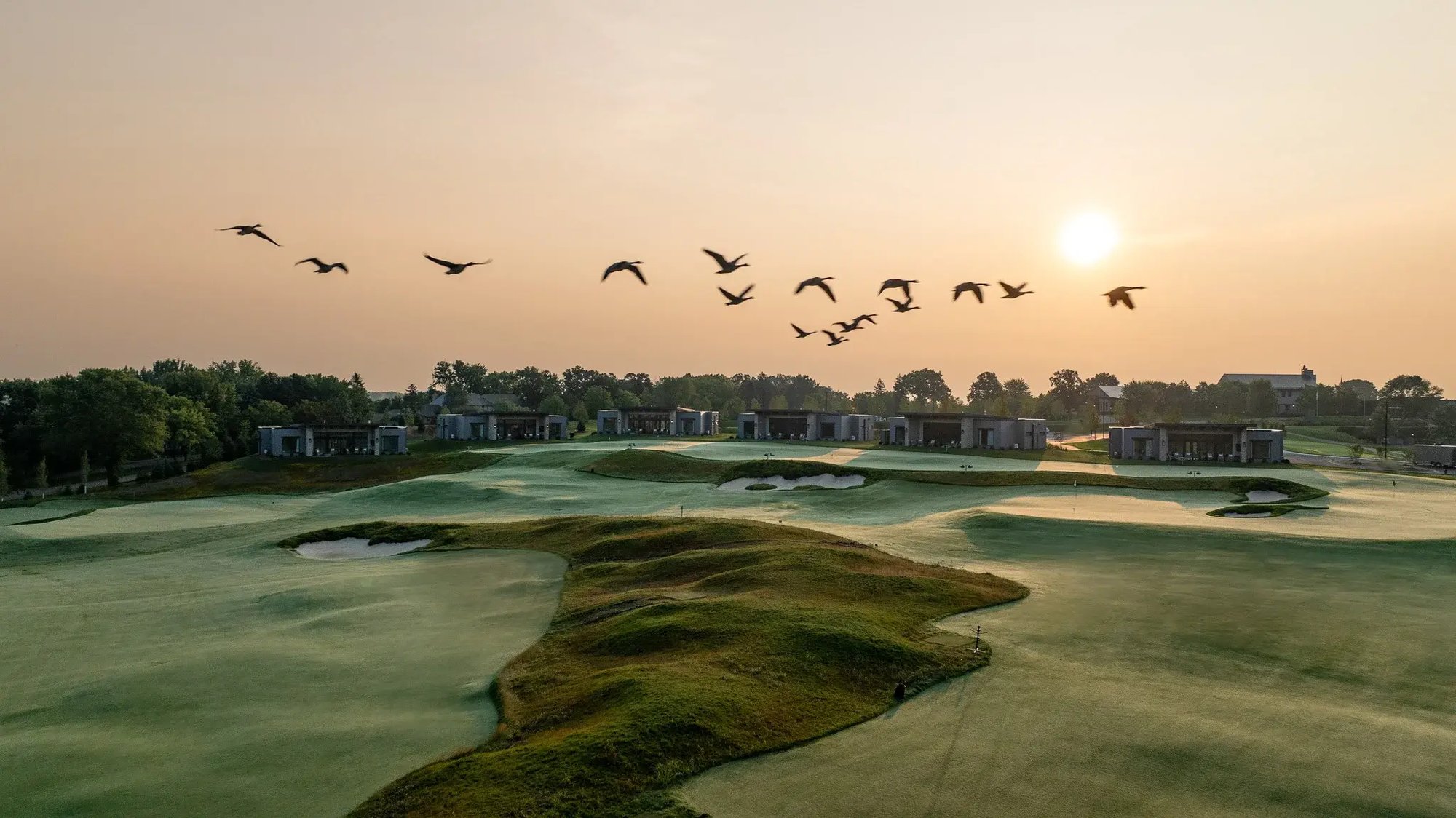
Hazeltine National Golf Club is one of America's leading championship venues, having hosted two U.S. Opens, two PGA Championships, a Ryder Cup, and numerous other major events. Designed by Robert Trent Jones Sr. and located in Chaska, Minnesota, it stands as a monument to championship-caliber golf. In 2025, the club opened Aerie, a 10-hole short course designed by Davis Love III featuring five double greens and no defined tee boxes, part of the club's Vision 2040 initiative.
History
Hazeltine National Golf Club was founded with a specific mission rarely stated so plainly at a private golf club's inception: to build a course capable of hosting major USGA and PGA championships. That clarity of purpose shaped every design decision made by Robert Trent Jones Sr. and has guided the club's stewardship through six decades of championship golf. The club's founding vision came from Totton P. Heffelfinger, a Minneapolis native who had served as president of the United States Golf Association from 1952 to 1954. Heffelfinger understood from his USGA tenure what championship-caliber venues required and recognized that the Minneapolis-St. Paul area lacked a course with the combination of length, variety, and conditioning quality necessary to attract major championships. The Minikahda Club in Minneapolis had hosted a U.S. Open in 1916, but mid-century freeway development threatened that course's future, and the metropolitan area had no other obvious candidate for major championships. Heffelfinger organized a group of like-minded golfers in 1962 and engaged Robert Trent Jones Sr. to design a course specifically engineered to host accomplished professional and amateur competition. Robert Trent Jones built Hazeltine National in 1962 on a property in Chaska, approximately twenty miles southwest of Minneapolis.
The course plays around Hazeltine Lake, a body of water that comes into play on several holes and creates the visual centerpiece of the property. Jones designed the course at a length that exceeded most of its American contemporaries, stretching past 7,000 yards at a time when the standard was several hundred yards shorter. He built large, undulating greens with multiple distinct sections and positioned bunkers to penalize conservative play from tees while creating risk-reward scenarios for players willing to drive for positioning. The course was immediately recognized as a demanding test, though some of its early critics found the routing somewhat arbitrary — a view that the USGA would share after the course's first championship. The 1966 U.S. Women's Open, won by Sandra Spuzich, was the course's first major championship. The 1970 U.S. Open drew the world's best players and produced widespread complaint about the course's design. Dave Hill, who finished second, memorably described the course as lacking only "eighty acres of corn and a few cows" — a comment that made national news. Tony Jacklin, the reigning Open Championship winner, was immune to such doubts and won the title at seven under par.
The controversy prompted the club to make significant course revisions before its next major championship. The 1991 U.S. Open, won by Payne Stewart over Scott Simpson in an eighteen-hole playoff, proved far more universally praised. Hazeltine hosted the PGA Championship in 2002, when Rich Beem held off Tiger Woods to claim the title, and the 2009 PGA Championship, when Y.E. Yang became the first Asian-born player to win a men's major championship, defeating Woods in the final round. The 2016 Ryder Cup — the first held at Hazeltine — produced an emphatic United States victory of 17 to 11, the Americans' largest margin of victory in twenty-five years. In March 2018, Hazeltine was named the host of the 2029 Ryder Cup, making it the first American venue to host the event twice. The course has been modified periodically, with Rees Jones contributing updates that addressed playability concerns while preserving his father's fundamental design intent. Hazeltine National remains the most championship-tested course in Minnesota and holds a consistent position among the top private courses in the upper Midwest. The 2016 Ryder Cup at Hazeltine, the United States' first win in the competition since 2008, also produced the largest American winning margin on home soil since 1979 and reversed a string of European dominance that had lasted the better part of two decades. The course's setup was praised for creating conditions that favored neither team unfairly, with the length and variety of the Hazeltine layout requiring the full range of a high-quality player's game across both foursomes and singles play, and the Minnesota galleries — famously raucous and inventive in their support for the American team, captained by Davis Love III — contributed to a home-course advantage that European players freely acknowledged. Hazeltine's routing, with its large spectator mounds and open sight lines, proved an ideal venue for the dramatic match-play confrontations that define Ryder Cup competition. The course had been stretched and reconfigured ahead of the 2009 PGA Championship and updated again before the 2016 Ryder Cup as part of the periodic Rees Jones modifications, reinforcing Hazeltine National's standing as the most championship-tested course in Minnesota.