White Bear Yacht Club
56 Dellwood AvenueDesigned by Donald Ross · Willie Watson · Est. 1912
Redesigned by Jim Urbina (2015)
Redesigned by Tom Doak (1993)
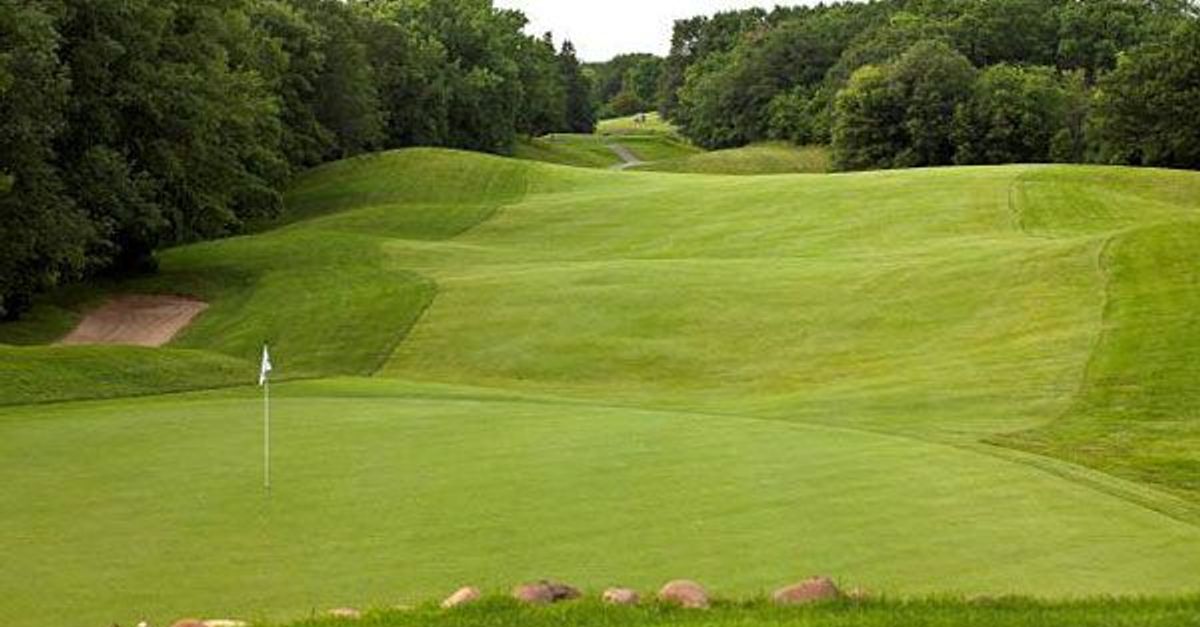
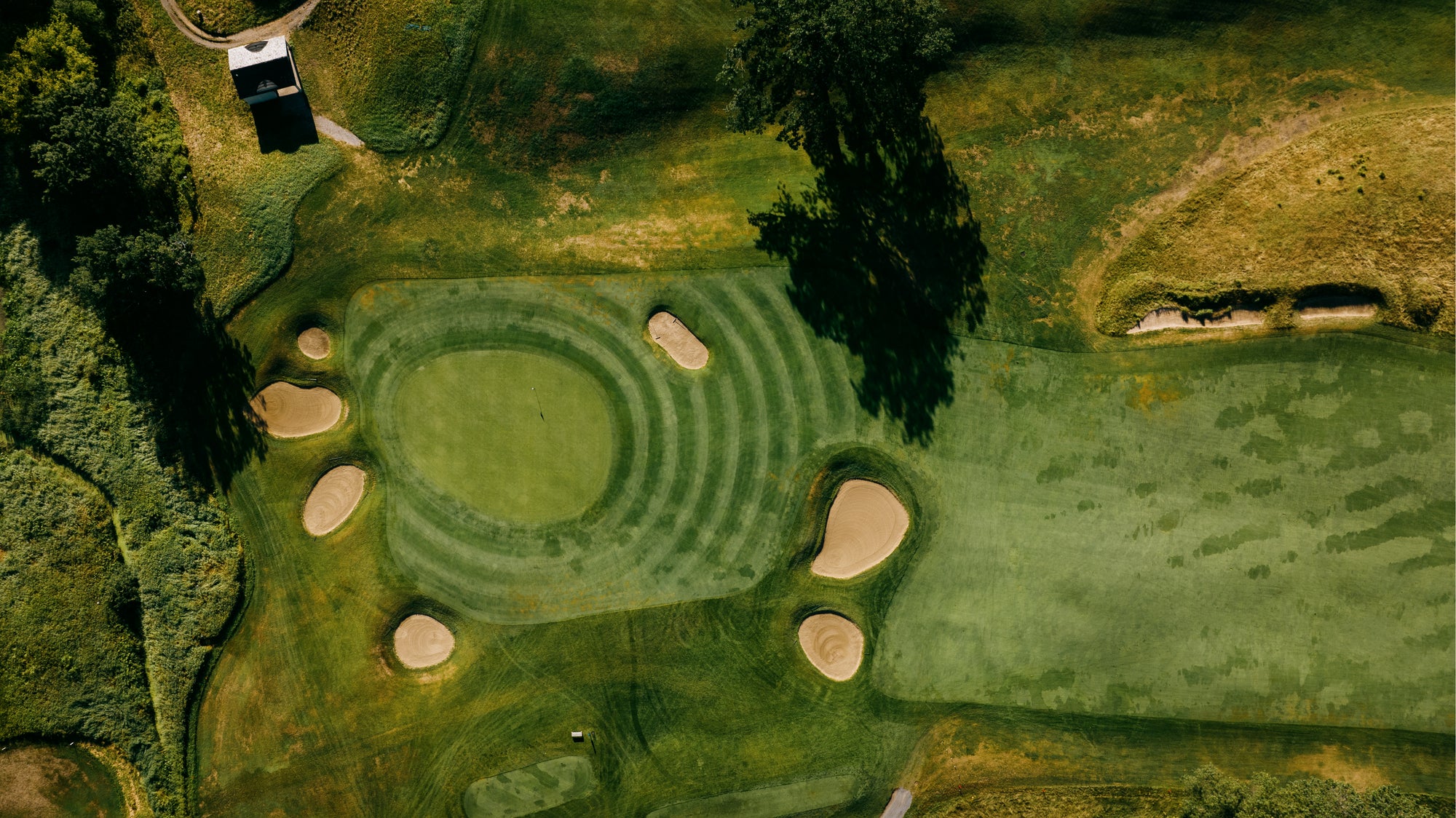
White Bear Yacht Club's golf course rolls across dramatically contoured terrain beside White Bear Lake, roughly twenty miles northeast of St. Paul. Donald Ross and William Watson routed the eighteen holes over heaving, tumbling ground that produces uneven lies on nearly every shot, rewarding creative shotmaking over raw power. The layout features five par-3s and five par-5s across just 6,471 yards, with only 62 bunkers — each one placed to demand thoughtful strategy rather than brute force.
History
White Bear Yacht Club stands on the rolling shores of White Bear Lake in Dellwood, Minnesota, a club whose origins predate the game of golf itself. Founded in the late nineteenth century as a sailing and social club, the yacht club became a gathering place for prominent Twin Cities families drawn to the lake's natural beauty and recreational possibilities. Golf arrived at White Bear in 1912, when the club purchased forty-five acres of remarkably undulating terrain adjacent to the lake for its first nine holes. The land acquisition was made possible in part by Lucius P. Ordway, co-founder of the Minnesota Mining and Manufacturing Company, known today as 3M, who purchased the initial property in 1911. Scottish architect William Watson was engaged to lay out the original nine holes, routing them across some of the most dramatically contoured land in the upper Midwest. Watson, who possessed an intimate understanding of traditional golf design principles from his Scottish roots, recognized the extraordinary potential of the site's natural terrain. The land was wildly rumpled, with sharp elevation changes, deep ravines, and undulating ridgelines that no modern architect would likely leave undisturbed. Watson embraced every fold and pitch, crafting holes that rewarded creativity and punished complacency in equal measure. Within three years, the club's membership had grown enthusiastic enough about the game to warrant expansion. Members purchased an adjacent forty acres, and a second nine was added in 1915.
The attribution of the second nine has been a matter of discussion among golf historians. Donald Ross, the prolific Pinehurst-based architect who was active throughout the region during this period, having designed Woodhill Country Club in 1916, revised Minikahda Club in 1917, and worked on Interlachen Country Club in 1919, has long been associated with the expansion. The club historian has noted that Ross "gave freely of his advice in its development," though the club does not possess definitive documentation of a formal Ross commission. The Ordway family, who maintained connections to Pinehurst where Ross was based, may have facilitated the relationship. Regardless of the precise allocation of credit, the completed eighteen holes exhibited a character that was unmistakably rooted in the Old World traditions of Scottish golf. Tom Vardon, brother of the great Harry Vardon, served as the club's head professional from 1916 to 1937, a tenure that profoundly shaped the golf culture at White Bear. Vardon was himself a capable course designer, having laid out the first nine holes at Stillwater Country Club, and his two-decade presence likely influenced the ongoing refinement of the course during its formative years. In 1920, Harry Vardon himself visited the club and played the course, lending a touch of international golfing prestige to the young layout. Tom Vardon's deep knowledge of strategic design and his personal connection to the birthplace of the game helped establish a standard of golf at White Bear that endures to this day. The course produced one of Minnesota's greatest amateur champions in Harrison R. "Jimmy" Johnston, who grew up playing the hilly terrain of White Bear and developed into a fierce competitor.
In 1929, Johnston traveled to Pebble Beach Golf Links and won the U.S. Amateur Championship, becoming the first golfer to claim the title west of the Mississippi River. Johnston went on to represent the United States in six Walker Cup matches, a testament to the caliber of golfer that the demanding White Bear layout could produce. His legacy remains central to the club's identity. The literary world also brushed against White Bear Yacht Club. In 1921, F. Scott Fitzgerald and his wife Zelda briefly occupied a room in the clubhouse, though their stay was short-lived. The couple was asked to relocate due to their exuberant behavior, an episode that adds a colorful footnote to the club's social history.Its defense lies instead in the wild topography and the strategic complexity that Watson wove into every hole. The course features dramatic elevation changes on nearly every hole, with few flat stances to be found anywhere on the property. Blind shots, obscured greens, and unconventional hazard placement define the experience. The putting surfaces are uneven and boldly contoured, demanding a creative touch around and on the greens.
In Minnesota Golf Association amateur competition, the course has proven its teeth: in some years, only a handful of players manage to finish under par across the full tournament. The course plays to a par of 72 from the blue tees at 6,471 yards, carrying a course rating of 72.1 and a slope of 132. These numbers, while modest by modern standards, belie the difficulty imposed by the terrain and the mental challenge of navigating so many quirky, character-rich holes. The site's naturally rumpled, unmodified land is the heart and soul of White Bear Yacht Club, and holes that cross roads and plunge through ravines contribute to an atmosphere more reminiscent of the ancient links of Scotland than a Minnesota suburb. In 2020, the club undertook a significant restoration project as part of the broader Sunlight Expansion initiative. Golf course consultant Jim Urbina guided the work, which included the removal of approximately 450 trees that had encroached over decades, creating excessive shade and degrading turf quality. Drainage improvements were made on twelve of the eighteen greens, and the overall goal was to restore the course to its original open character and playing conditions. The $750,000 investment in the golf course was part of a larger $2.4 million club improvement effort, reflecting the membership's commitment to honoring the historic layout while ensuring its long-term health. Today, White Bear Yacht Club is ranked fifth in the state of Minnesota by Golf Digest and recognized among the top classic courses in the nation by Golfweek. It stands as a living monument to the virtues of minimalist design, a course where the land was allowed to speak for itself and where the strategic challenges flow organically from the terrain rather than from any imposed artifice. For golfers willing to embrace its quirks and celebrate its unconventional character, White Bear offers a standout distinctive and rewarding rounds of golf in the American heartland.