The Ocean Course at Kiawah Island
1000 Ocean Course Drive, Kiawah Island, SC 29455Part of Kiawah Island Golf Resort →Designed by Pete Dye · Alice Dye · Est. 1991
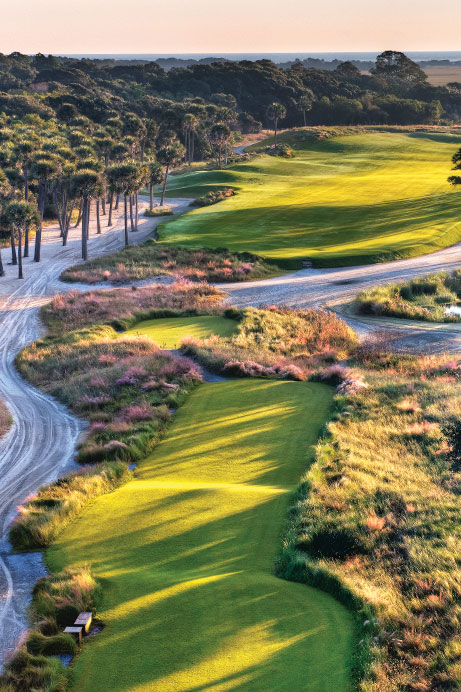
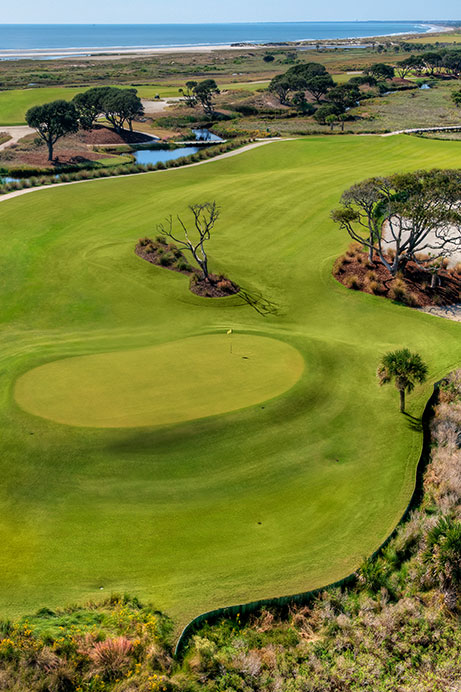
Designed by Pete and Alice Dye to host the 1991 Ryder Cup, The Ocean Course boasts more seaside holes than any other course in North America, with ten holes hugging the Atlantic and the remaining eight running parallel. Alice Dye's decision to raise the entire layout above the dunes gives players unobstructed ocean views from every hole while fully exposing them to Kiawah's relentless coastal winds, which can shift shot selection by as many as eight clubs from one day to the next.
History
The Ocean Course at Kiawah Island was not built from a long institutional history — it was conceived, designed, and constructed for a single occasion: the 1991 Ryder Cup. The Ryder Cup had originally been scheduled for PGA West in La Quinta, California, but a format change to include players from all of Europe created pressure to move the event to a venue in a more European-friendly time zone and cultural setting. Kiawah Island Resort on the South Carolina coast was selected, and in 1989 Pete and Alice Dye were commissioned to design a course on raw barrier island land between the Atlantic Ocean and the Kiawah River. The Dyes had under two years to build an eighteen-hole championship course on a site where no course had previously existed. Pete Dye's original routing kept much of the course inland, sheltered from the worst ocean wind. It was Alice Dye who argued that a course this close to the ocean should look and feel like it was on the ocean — that visitors and competitors should never forget where they were. Her suggestion was to raise the entire course by several feet using fill material, elevating fairways and greens above the dune line and giving players unobstructed Atlantic views from every hole.
Pete Dye adopted the idea fully, and the resulting layout — with ten holes directly adjacent to the ocean and the remaining eight running parallel to those — has a visual drama and wind exposure that is unmatched among American coastal courses. Alice Dye's credit as co-designer has been formally recognized; the course's official attribution is Pete and Alice Dye. The Ocean Course stretches to 7,876 yards from its back tees, making it one of the longest courses used for major championship golf. Wind is its primary defense. Depending on direction, the same hole can play as a driver-wedge par-4 or a driver-long iron, and the prevailing southwesterlies off the Atlantic can shift the effective difficulty of the layout by several shots from day to day. The par-3 holes are particularly exposed; the seventeenth, at 197 yards over water, was the scene of decisive exchanges during the 1991 Ryder Cup's final-day singles. The greens are elevated and often backed by the ocean, creating approach-shot choices in which the safe option is typically upwind and the aggressive line directly into the breeze.
The 1991 Ryder Cup — immediately nicknamed the "War by the Shore" — established the Ocean Course's reputation before the grass had fully matured. The United States defeated Europe 14.5 to 13.5 in a final-day singles session that came down to the last match: Hale Irwin against Bernhard Langer on the eighteenth hole, with Langer missing a six-foot putt that would have halved the match and retained the cup for Europe. The emotional intensity of the day and the visual drama of the setting — flags bending in the Atlantic wind, the ocean visible behind nearly every shot — made this Ryder Cup among the widely covered in the history of the match. The PGA Championship returned to the Ocean Course in 2012, won by Rory McIlroy at eight under par, and again in 2021, when Phil Mickelson at fifty years old became the oldest major champion in golf history with a six-under-par total. The Ocean Course is scheduled to host the PGA Championship again in 2031, giving it four major championships within forty years of opening. After the 1991 Ryder Cup the course required significant modifications to make it suitable for daily resort play and for subsequent championships. The Dyes made periodic adjustments to individual holes in the years following the opening, and a major infrastructure investment before the 2012 PGA Championship improved irrigation, cart path routing, and drainage throughout.
Additional bunker and rough-line changes were made before the 2021 PGA Championship. The Ocean Course ranks in the top twenty-five of Golf Digest's America's 100 Greatest Public Courses and in the top fifty of its overall rankings including private clubs. Its combination of championship history, coastal drama, and architectural ambition — and the story of Alice Dye's pivotal insistence on raising the layout toward the sea — make it the defining resort course of the American East Coast and among the significant courses built anywhere in the world in the final decade of the twentieth century. The Ocean Course has also hosted the Senior PGA Championship and numerous other professional and amateur events in the decades since the 1991 Ryder Cup. Its place on South Carolina's coast, at a resort that has invested consistently in all five of its courses and in the broader Sea Island destination experience, has made Kiawah Island among the visited golf destinations on the American East Coast. The Ocean Course's specific combination of oceanic exposure, maximum length, and championship pedigree makes it a bucket-list venue for serious golfers from around the world, and the resort's status as a private residential and hotel community ensures that access remains controlled and the course conditions remain at a consistently high standard.