Sebonack Golf Club
405 Sebonac Rd, Southampton, NY 11968Designed by Jack Nicklaus · Tom Doak · Est. 2006
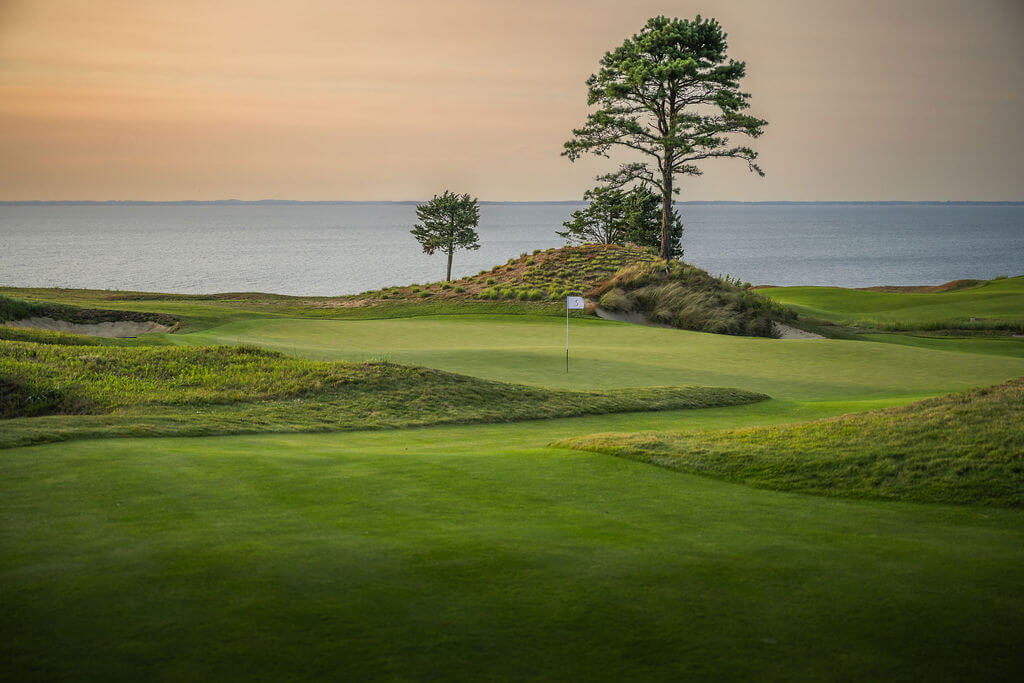
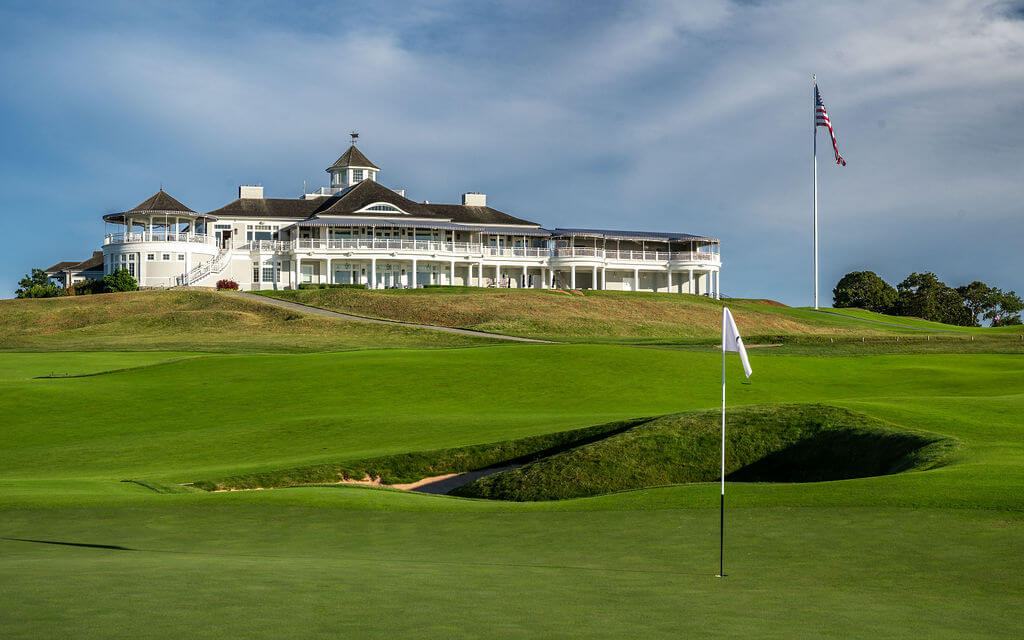
Jack Nicklaus and Tom Doak split the holes between them on 300 acres above Great Peconic Bay, and the remarkable thing is you cannot tell where one architect ends and the other begins. Wedged between Shinnecock Hills and the National Golf Links of America, Sebonack hosted the 2013 U.S. Women's Open and proved that two opposing design philosophies can produce something seamless on the right piece of land.
History
Sebonack Golf Club occupies a storied stretch of golfing geography in the United States, situated on 300 acres along the Great Peconic Bay in Southampton, New York, directly adjacent to two of America's most revered courses: Shinnecock Hills Golf Club and the National Golf Links of America. The property itself carries a fascinating footnote in golf history -- Charles Blair Macdonald, the legendary architect who built the National Golf Links next door in 1911, had considered and ultimately rejected this very site nearly a century before it would finally become a golf course. The club's creation is the vision of Michael Pascucci, a Long Island businessman who built his fortune in the automobile leasing industry. In 2001, Pascucci acquired the 300-acre property, which had previously served as a camp owned by the International Brotherhood of Electrical Workers. He invested a total of $115 million to transform the site into a private golf club. Pascucci initially approached Jack Nicklaus to design the course, but after witnessing Tom Doak's acclaimed work at Pacific Dunes in Bandon, Oregon, he conceived the idea of pairing two designers whose philosophies could hardly be more different. It would become the first-ever collaboration between Nicklaus, whose firm had designed over 270 courses worldwide emphasizing strategic challenge, and Doak, whose minimalist approach prioritized natural landforms and restraint. The division of labor between the two architects produced a creative tension that ultimately enriched the finished product. Doak handled the primary routing of the course and much of the on-site execution, including the shaping of green sites and natural contours that follow the rolling coastal terrain.
Nicklaus contributed to the strategic architecture, relocating perhaps as many as half of the bunkers into more demanding positions and refining tee-to-green strategy to ensure the course tested players of every skill level. Nicklaus also softened some of Doak's green designs to improve playability without sacrificing their natural character. The result was a layout that balanced Doak's naturalism with Nicklaus's emphasis on bold risk-reward decision-making on nearly every hole. Sebonack Golf Club officially opened for play on August 23, 2006, with a par-72 layout measuring 7,512 yards from the championship tees, carrying a course rating of 77.5 and a slope of 151. The design features wide, undulating playing corridors, expansive waste dunes that recall the sandy barrens of Long Island's natural landscape, rough-hewn bunkers with rugged edges, and large greens with considerable internal movement. The course takes full advantage of its coastal setting, with multiple holes offering sweeping views of the Great Peconic Bay and Cold Spring Pond. Four holes -- the 11th, 12th, 17th, and 18th -- play directly along the bay, while the water remains visible from much of the front nine and throughout the inward stretch from the 10th onward. Among the course's most compelling holes is the par-4 18th, a bluffside closer that features a two-tiered green overlooking panoramic bay vistas, demanding precision on the approach while rewarding players with a standout dramatic finishing views in American golf. The par-5 15th stretches as the course's longest hole, rarely reachable in two shots, threading through undulating terrain with strategic bunkering that forces players to plot their way carefully to the green.
The par-4 11th and 14th both offer aggressive and conservative playing lines, embodying the Nicklaus-Doak collaboration's emphasis on presenting meaningful strategic choices rather than dictating a single path of play. Golf Digest recognized Sebonack as its Best New Private Course of 2007, and the club quickly ascended national rankings, peaking at 38th on Golf Digest's list and also appearing at 97th on Golf Magazine's Top 100. As of 2025-26, the course holds the 51st position on Golf Digest's America's 100 Greatest Golf Courses. The club maintains an invitation-only membership capped at approximately 200 members, with Pascucci and his family continuing to own and operate the facility since its inception. Sebonack's defining championship moment came in June 2013, when the club hosted the 68th U.S. Women's Open -- the first time the championship had been played on Long Island and the first in the greater New York City metropolitan area since 1987. South Korea's Inbee Park delivered a commanding performance, building a lead through the first three rounds and closing with a 2-over-par 74 on Sunday for an 8-under-par total of 280, winning by four strokes over I.K. Kim. Park's victory was historic: she became only the second woman in history, after Babe Didrikson Zaharias, to win the first three major championships in a single season.
The course proved a rigorous test, with its wind-exposed coastal layout, firm green complexes, and demanding finishing stretch challenging the best women's players in the world. The club has also demonstrated environmental stewardship. In 2009, Sebonack converted its entire golf cart fleet to solar power, reflecting Pascucci's commitment to sustainable operations on a sensitive coastal property. The maintenance program emphasizes the preservation of native grasses and dune structures that define the course's visual identity and ecological character. Sebonack's location between two of golf's most historically significant courses -- Shinnecock Hills, which has hosted five U.S. Opens, and the National Golf Links, Charles Blair Macdonald's masterwork -- places it within a corridor of golfing heritage unmatched anywhere in America. That Nicklaus and Doak produced a course capable of standing alongside such distinguished neighbors, on land that Macdonald himself once considered, speaks to the quality of both the site and the collaboration that brought it to life. Sebonack has earned its place in this remarkable stretch of Southampton shoreline, a modern course deeply connected to the traditions that surround it.