Rock Creek Cattle Company
105 Pauly Dr, Deer Lodge, MT 59722Designed by Tom Doak · Est. 2008
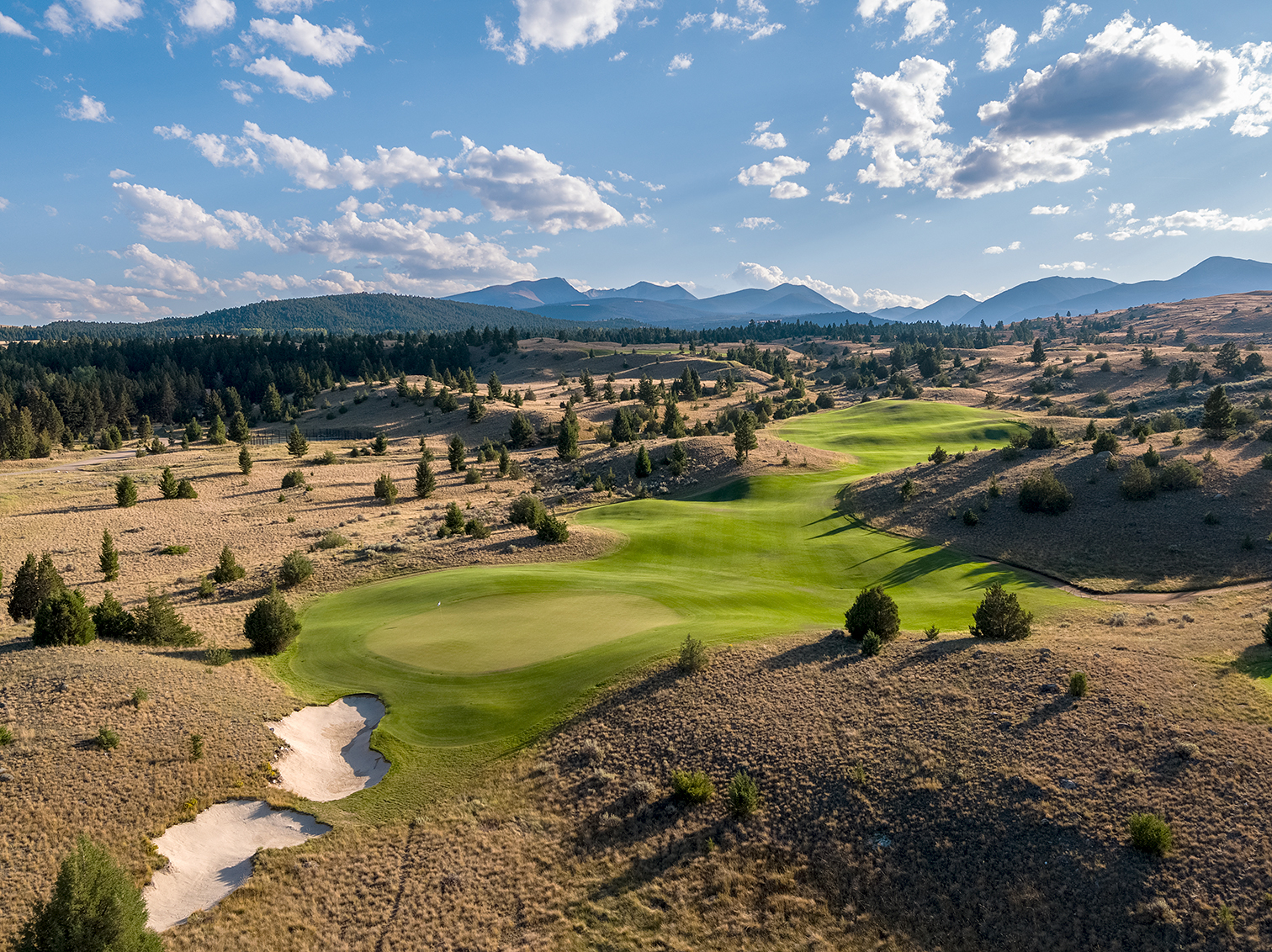
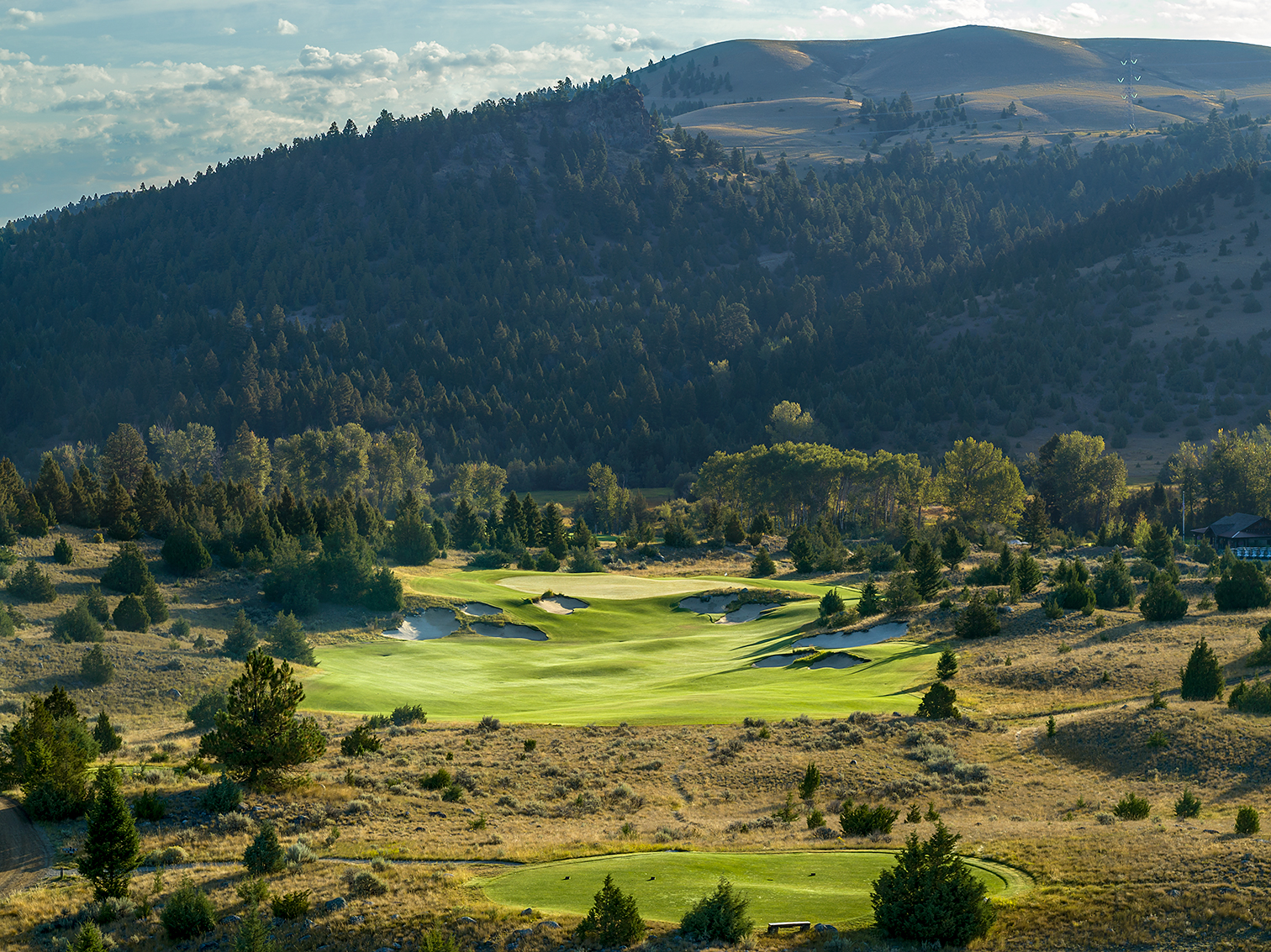
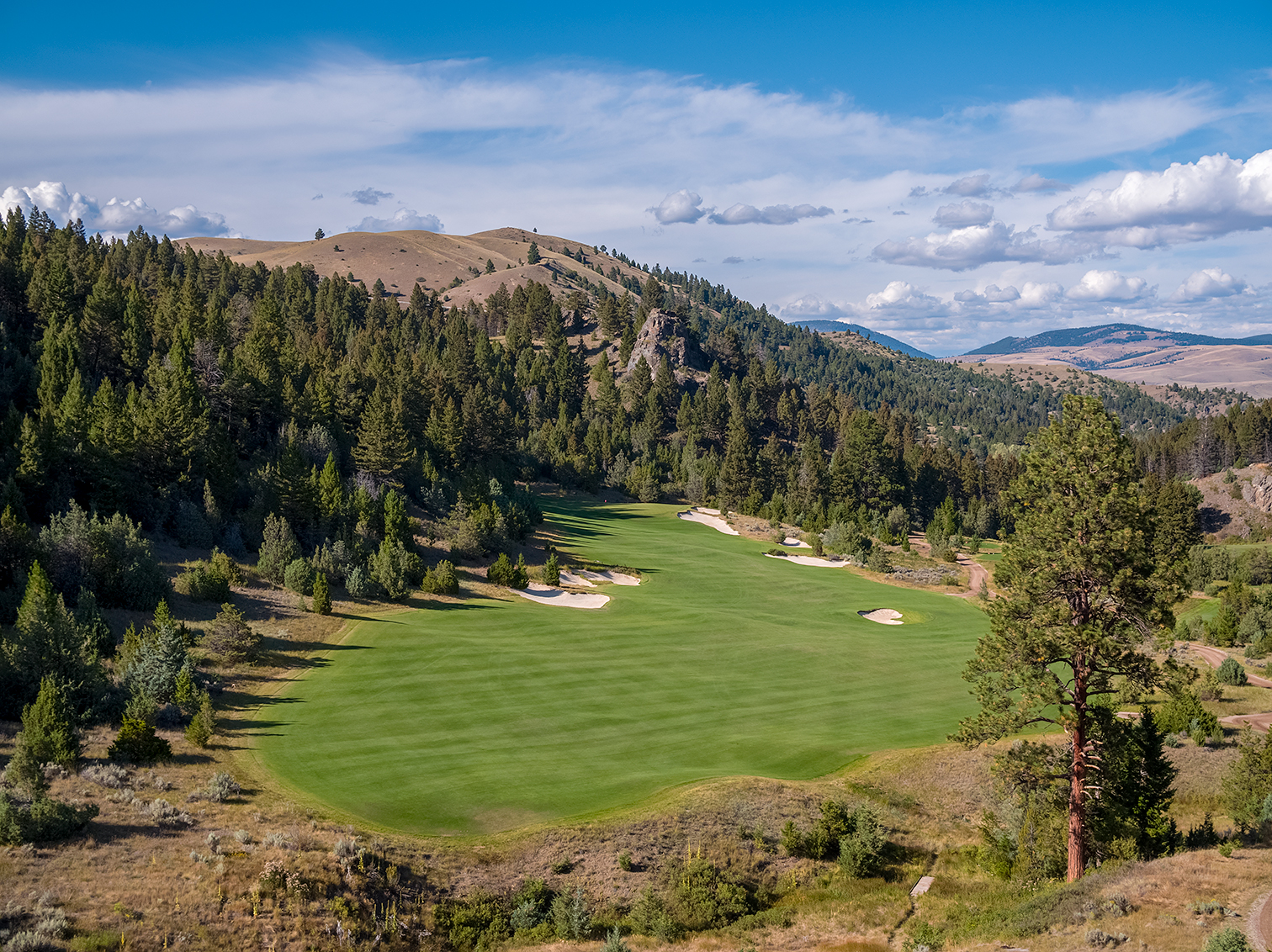
The routing covers 350 acres of a working 30,000-acre cattle ranch near Deer Lodge, climbing through open pasture to the seventh tee before threading through pine forests and ravines along Rock Creek itself. At 4,800 feet of elevation, with no sound but wind and the occasional fly fisherman below, Tom Doak built something closer to pilgrimage than golf.
History
Rock Creek Cattle Company occupies a 40,000-acre working cattle ranch in the foothills of the Flint Creek Range north of Deer Lodge, Montana, where the entrance drive alone stretches 6.6 miles from the highway to the clubhouse. The property was purchased in 2004 by Bill Foley, founder of the financial services company Fidelity National Financial, who assembled a group of roughly fifty partners and engaged Tom Doak to design a golf course that would honor the wild, untamed character of the Montana landscape. Doak, working with lead associate Eric Iverson and a team that included Brian Slawnik, Brian Schneider, Kye Goalby, Jonathan Reisetter, and George Waters, completed the course in 2008. Rick Hathaway was brought on as greenkeeper to maintain the property. The site presented Doak with a canvas unlike any he had previously encountered. The terrain is rugged and rocky, with protruding boulders scattered across rolling hills of native grass, thick stands of ponderosa pine, and the clear waters of Rock Creek, a productive trout stream that winds through the property and serves as both a visual centerpiece and a strategic hazard. The Clark Fork River also runs through the ranch, and the combination of blue-ribbon fishing water and sweeping mountain views gives the property a character that is distinctly Montana. Doak's design philosophy at Rock Creek draws heavily from the Old Course at St. Andrews. He employed a loop routing with expansive short-grass corridors, central hazards that force directional choices off the tee, risk-reward strategies that shift with wind and pin position, and contoured putting surfaces that demand imagination around the greens.
The fairways are extraordinarily wide, the broadest reaching 110 yards across on the eleventh hole, but their undulating surfaces create stance variations and kick angles that make positioning critical. Doak moved remarkably little earth during construction because the ground was so rocky. Rather than sand-capping the fairways to create smooth surfaces, his team manually sorted boulders, preserving the natural terrain that gives the course its distinctive character. The bunkers were shaped to emulate those blown out by constant winds, with jagged edges cut around rocks and sagebrush, lending them an untouched, natural appearance. The routing begins in open pasture along Rock Creek and makes a slow, steady climb over the first six holes, gaining 250 feet in elevation. The opening hole immediately demands a decision: a bunker 260 yards from the tee splits the fairway, requiring players to choose left, right, layup, or carry. This strategic template, offering multiple paths with corresponding risks and rewards, repeats throughout the round. The third hole, a 545-yard par five, climbs imperceptibly through a 50-foot elevation gain that most players do not notice until they look back from the green, with a central bunker dividing the fairway and demanding a committed tee shot. At the seventh tee, the course reaches its highest point at 4,960 feet above sea level. This 445-yard par four is a remarkable achievement in minimalist design: there is not a single bunker or hazard on the hole, yet the dramatic topography, which reviewers have compared to Irish links terrain, creates a test as demanding as any on the course.
From the seventh, the routing plunges through the pines and across the ravines of Rock Creek, with the par-three eighth playing over the stream to a green surrounded by six bunkers. The eighth is not only a compelling golf hole but also sits alongside one of the best fishing pools on the property, a detail that captures the dual nature of life at Rock Creek. The ninth hole bursts back into the open atop rolling hills, and the outward journey culminates with the tenth, a massive 632-yard par five that exemplifies Doak's width philosophy. From the course's highest point, players can see for miles across the Montana landscape, and the hole's expansive fairway offers multiple routes, with bunker placement shifting the optimal line depending on how much risk one is willing to accept. The back nine features hogback, punchbowl, and sideslope fairways as the course rolls downward and homeward. The eleventh, at 439 yards, is considered the most challenging hole on the course. The sixteenth, a 467-yard par four, features an iconic lone tree that influences both tee shot strategy and approach angle. The seventeenth is one of two par threes that play over Rock Creek, a 191-yard one-shotter where the stream runs directly in front of and to the right of the green. The eighteenth, a 555-yard par five, concludes the routing with convoluted fairway contours alongside the creek, bringing players back to the lodge where they started. The green-to-tee walk is kept short throughout the layout, and the course is designed for walking, with cart use discouraged to preserve the immersive experience of moving through the landscape on foot.
The course plays to a par of 71 and stretches to 7,466 yards from the back tees, making it the longest course Doak has designed. From the second set of tees it plays 6,735 yards, and from the forward tees, 5,445 yards. The championship rating is 74.9 with a slope of 137. The Kentucky bluegrass fairways play firm but receptive, and the greens are large to match the scale of the surrounding landscape. Doak has called Rock Creek one of the highlights of his career, noting that the fairways are unlike anything else in his portfolio. "The impetus was all the rocks," he has explained. "We wanted wide enough playable area so people wouldn't take drops to avoid hitting rocks." The result is a course where width serves both strategic and practical purposes, where the natural ground contours provide the challenge that bunkers and hazards supply on more conventional designs. Rock Creek Cattle Company has been ranked the number-one course in Montana every year from 2011 through 2014 and again from 2017 through 2026. It is ranked 29th in the United States, 26th in North America, and 51st in the world. For a course that opened without fanfare on a remote cattle ranch accessible only by a long dirt road, the recognition speaks to the quality of the design and the singular experience of playing golf in a landscape where elk, deer, and eagles are more common companions than other golfers.