Quaker Ridge Golf Club
146 Griffen Ave, Scarsdale, NY 10583Designed by A.W. Tillinghast · Est. 1916
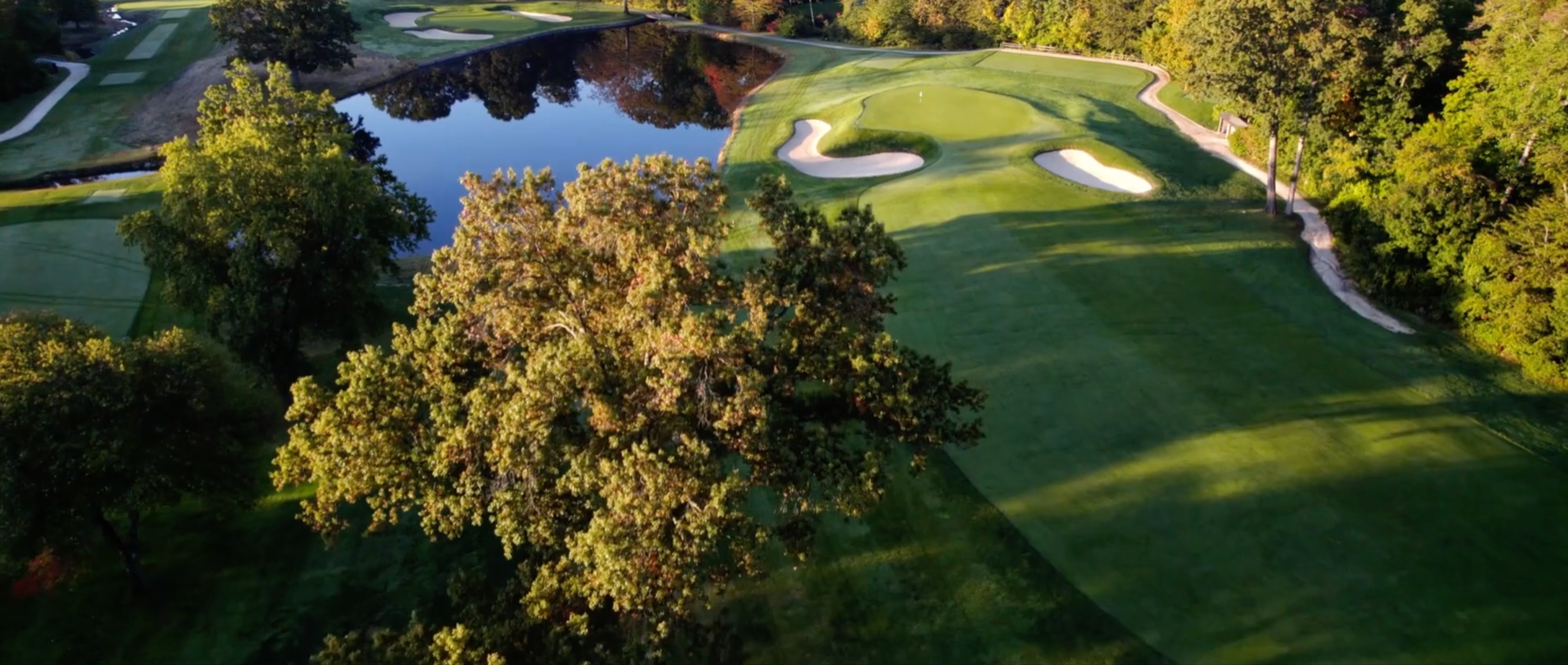
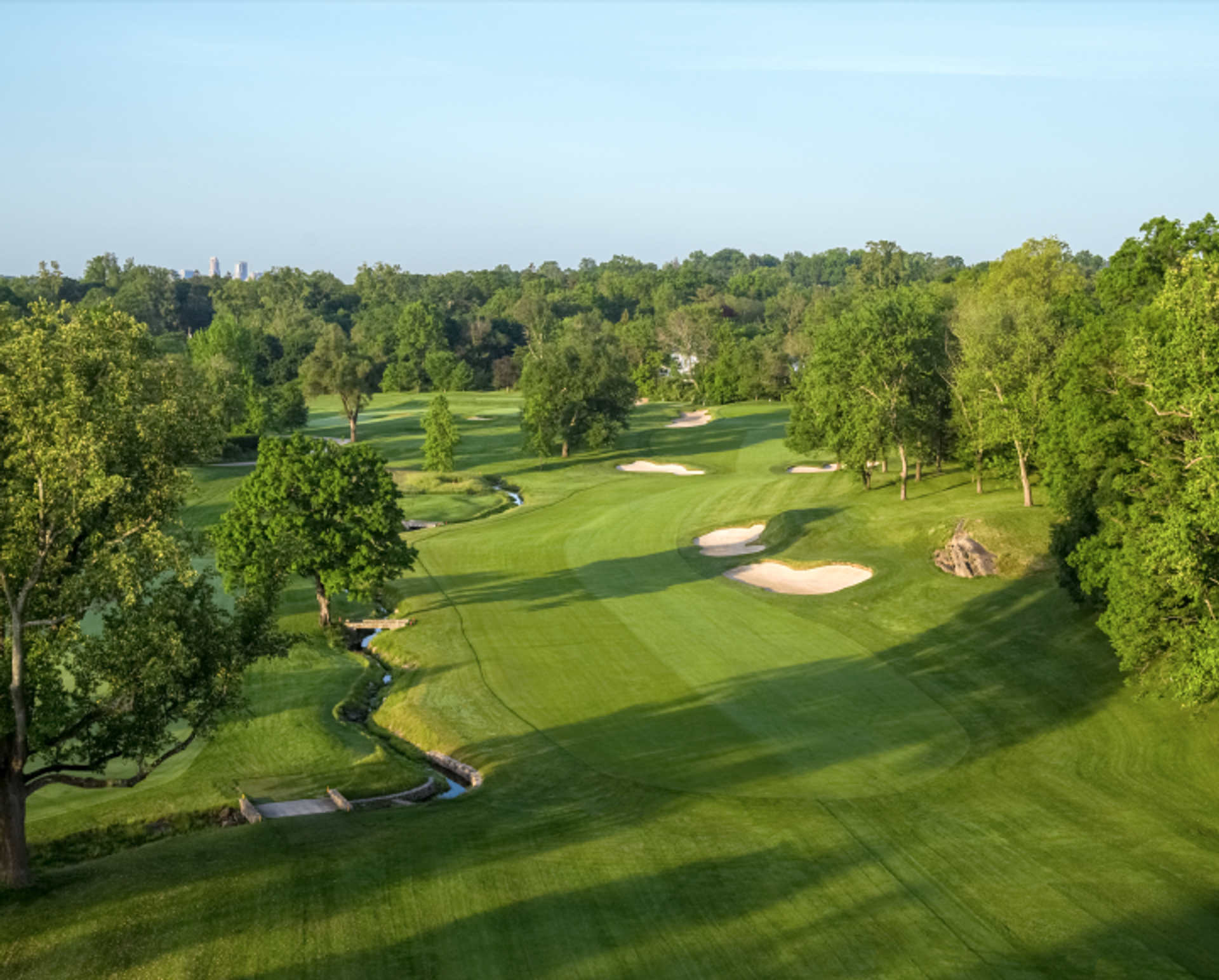
Quaker Ridge Golf Club is a revered A.W. Tillinghast design in Scarsdale, New York, consistently ranked among America's top 100 courses. The club has hosted the Walker Cup, Curtis Cup, and numerous USGA championships.
History
Quaker Ridge Golf Club in Scarsdale, New York, traces its origins to 1915, when a nine-hole course called the Metropolitan Golf Links was established on property in Westchester County. Designed by John Duncan Dunn, the original layout was modest and quickly beset by financial difficulties. In 1916, a small group of businessmen purchased the property and reconstituted the venture under the name Quaker Ridge Golf Club, a reference to the area's Quaker heritage. Their ambitions extended well beyond nine holes. The new ownership commissioned Albert Warren Tillinghast, then an ascending figure in American golf architecture, to transform the property into something worthy of the Metropolitan New York area's growing appetite for championship-caliber golf. Tillinghast's assignment was to redesign seven of Dunn's existing holes and create eleven entirely new ones, producing a full eighteen-hole layout. The course opened for play in 1918, and the Tudor-styled clubhouse followed in 1923. The result was a par-70 layout that would come to be known affectionately as "Tillie's Treasure," a name that reflects both its quality and its relative obscurity compared to some of Tillinghast's more famous works at Winged Foot, Baltusrol, and Bethpage Black. Many who know the course consider it Tillinghast's first truly great design, the place where his architectural philosophy crystallized into something extraordinary. In 1925, the club purchased additional adjacent property, and Tillinghast was recommissioned to incorporate the new land into the existing routing. This expansion allowed him to refine and strengthen several holes, producing the fundamental layout that survives today.
The course stretches 7,008 yards from the back tees and features four par threes and two par fives, a configuration that demands precision and strategic thinking throughout. Tillinghast routed the holes across a rolling Westchester landscape characterized by mature hardwood trees, natural creek crossings, and significant elevation changes. Downhill approaches on holes like the second, twelfth, and sixteenth enhance strategic depth, while the sixth hole demands that tee shots be threaded between a creek and a hillside, exemplifying Tillinghast's ability to create compelling challenges within natural corridors. The course's bunker work is a hallmark of Tillinghast's style: bold, visible, and strategically placed to frame the correct line of play while punishing the careless shot. The green complexes are varied and demanding, with subtle slopes and contours that have confounded generations of skilled players. The fourteenth hole, a par five, is often cited as Tillinghast's finest example of a "Sahara" hole, a concept he employed at multiple courses but never with as much drama as here. The seventeenth is a superb drive-and-pitch par four whose green was later restored to its original diminutive dimensions, creating a hole where anything can happen in a closely contested match. Quaker Ridge's tournament history reflects its stature among American courses. In 1936, the club hosted the Metropolitan Open, an event that proved to be Byron Nelson's first significant professional victory and a harbinger of the legendary career to come. The club is one of only three venues in the United States to have hosted both a Walker Cup and a Curtis Cup, a distinction it shares with a very small group of American courses. The 1997 Walker Cup was a dominant American performance, an 18-6 victory over a Great Britain and Ireland team that included a seventeen-year-old Justin Rose, who would go on to win the U.S. Open at Merion in 2013. The 2018 Curtis Cup brought international women's amateur competition to Quaker Ridge, with the United States team again prevailing on the Westchester turf. The club has also supported numerous Metropolitan Golf Association and Westchester Golf Association championships over the decades, along with its annual Hochster Memorial Invitational. In 2024, the USGA announced that Quaker Ridge would host the 2038 U.S. Senior Amateur Championship. The course has undergone several rounds of renovation work, each reflecting the prevailing architectural philosophy of its era. In 1965, Robert Trent Jones Sr. was brought in to add new tees and remove some of Tillinghast's original bunkers, changes that were typical of the modernization trend of that period. Between 1991 and 1993, his son Rees Jones undertook a project to restore some of the original bunkering and add additional new tees. The most significant restoration, however, came from Gil Hanse, who began a consulting relationship with the club in 2002 and ultimately led a comprehensive multi-year project completed around 2011. Hanse's approach was sympathetic and scholarly. Because Tillinghast's original blueprints had long been lost, Hanse meticulously studied aerial photographs from the 1916 and 1924 eras to understand the original green sizes, bunker positions, and fairway shapes.
He restored green complexes to their circa-1924 configurations, returned bunkers to their original scale and placement, and selectively removed trees that had encroached on the design over many decades. The restoration also lengthened the course to meet modern requirements while preserving the strategic integrity of Tillinghast's vision. Jack Nicklaus once called Quaker Ridge "quite a golf course down the street," a reference to its proximity to the nearby Winged Foot Golf Club, another Tillinghast masterpiece. The Metropolitan Golfer magazine voted it the top course in the Metropolitan New York area in 1989, and Golf Digest has ranked it consistently among the top courses in the nation. On November 23, 2020, the United States Department of the Interior officially listed Quaker Ridge Golf Club on the National Register of Historic Places, a recognition that required a sixty-seven-page submission report, photographs, and several meetings over a five-year process. The designation placed Quaker Ridge in the company of Augusta National, Baltusrol, Merion, Shinnecock Hills, and neighboring Winged Foot as golf properties recognized for their architectural and historical significance. A local legend adds a further layer of history to the grounds: George Washington is said to have sheltered under an oak tree near what is now the tenth hole during the Revolutionary War. Whether or not the tale is apocryphal, it speaks to the deep roots that Quaker Ridge has in the American landscape.