Pacific Dunes
57744 Round Lake Road, Bandon, OR 97411Part of Bandon Dunes Golf Resort →Designed by Tom Doak · Est. 2001
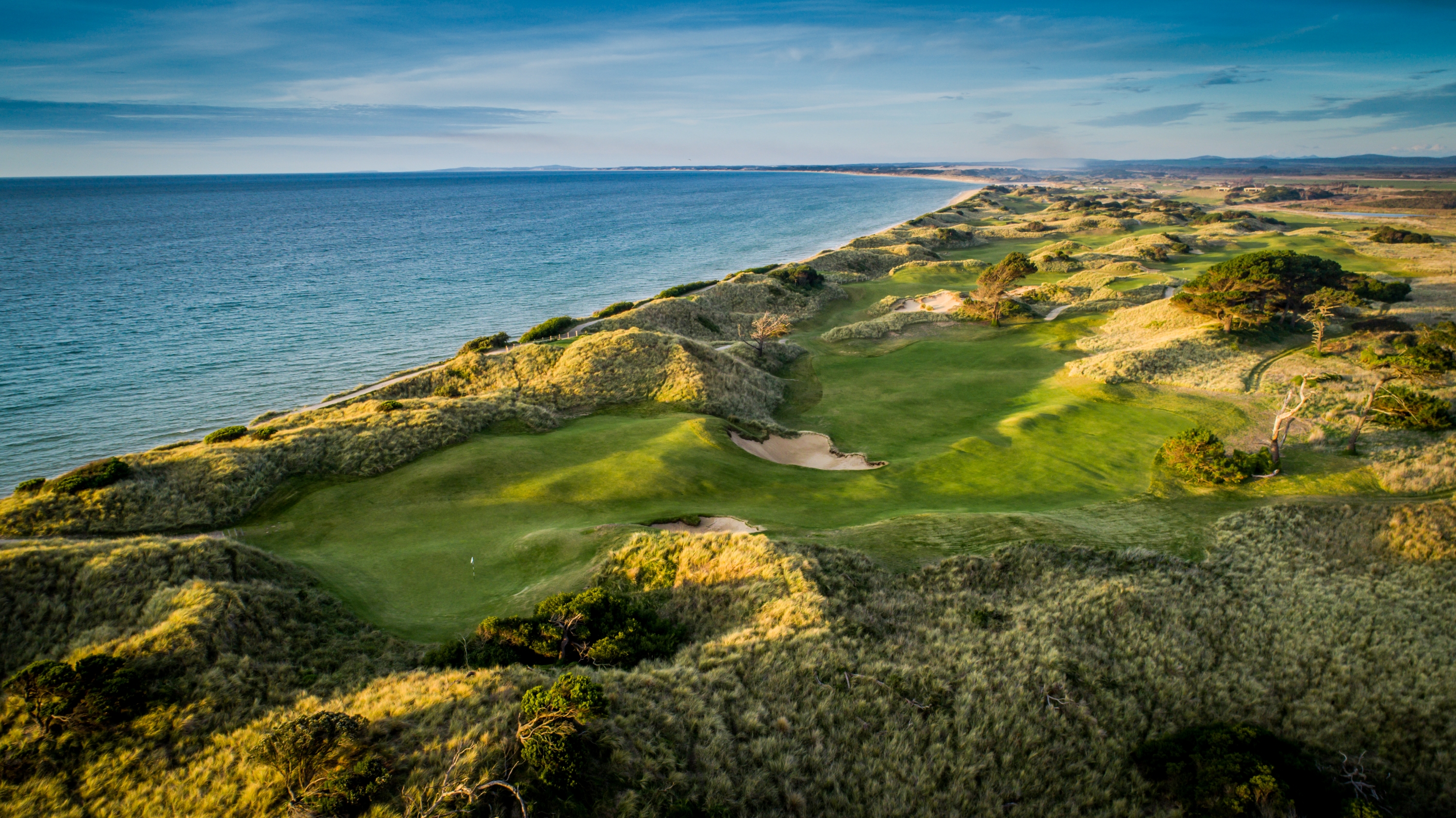
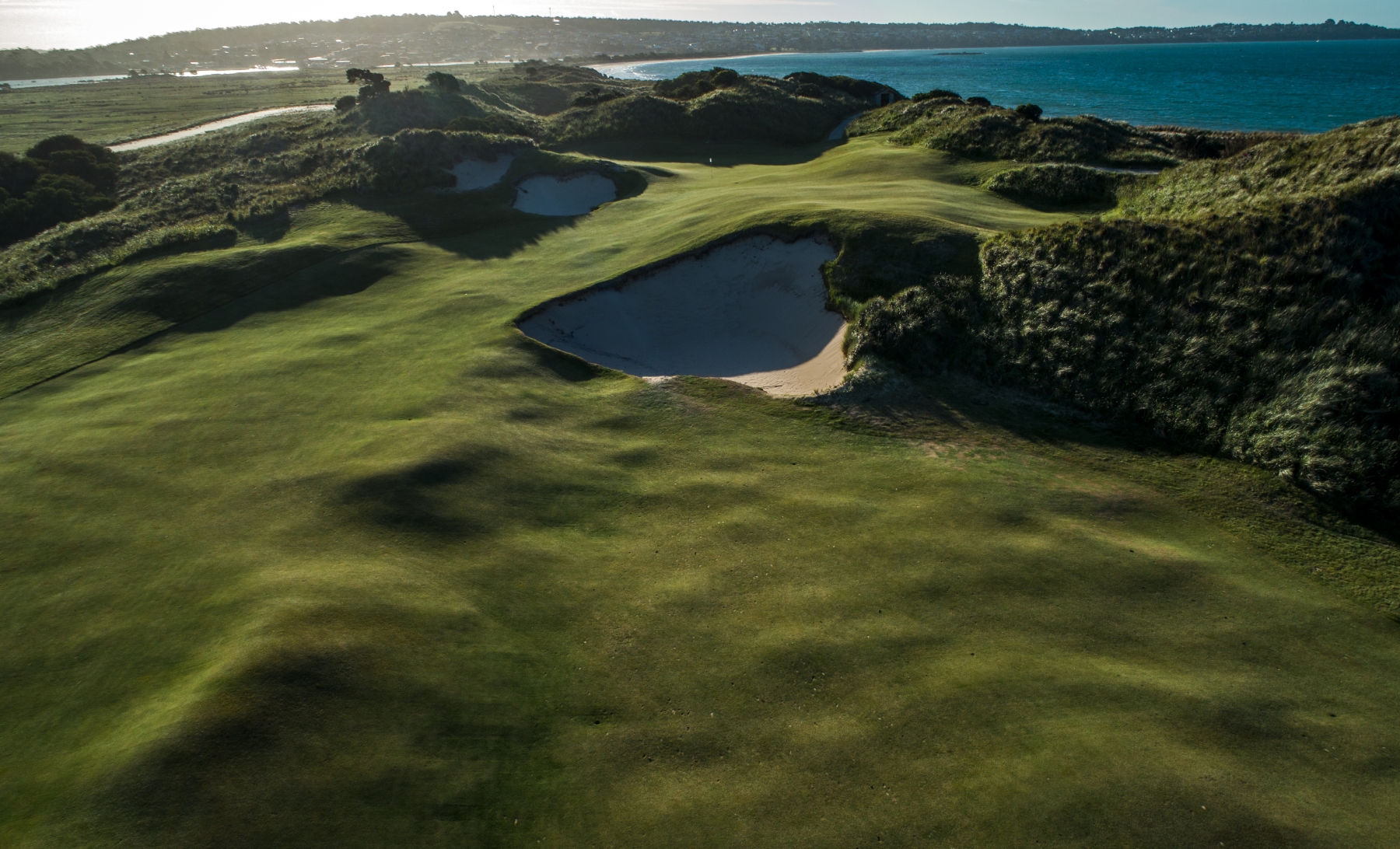
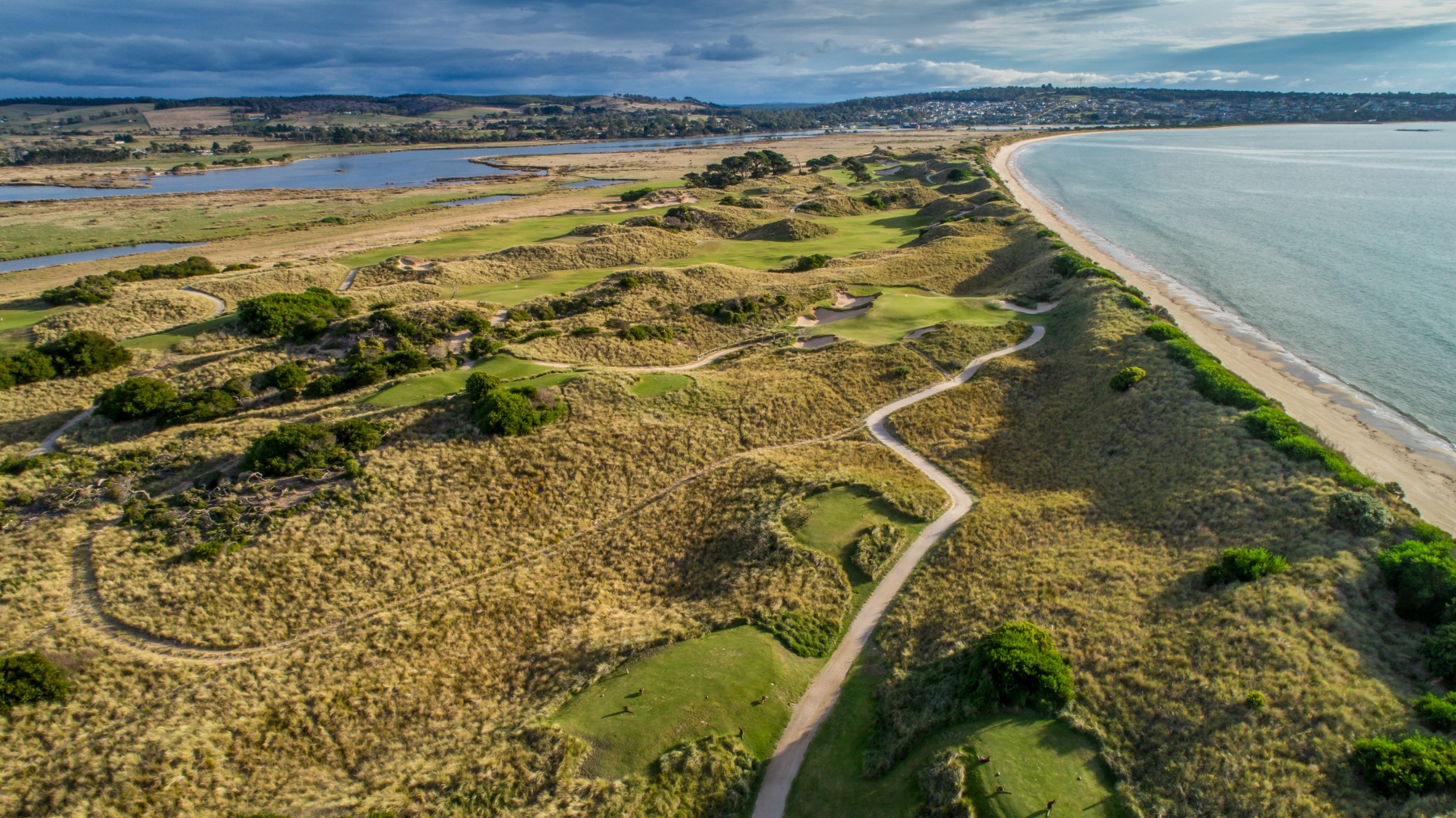
Pacific Dunes rides the bluffs above the Oregon coast on a stretch of rumpled, wind-shaped terrain that Tom Doak routed to weave golfers between the ocean cliffs and the interior dune ridges. The par-3 11th, perched on the cliff's edge with the Pacific crashing below, has become a photographed hole in North America. Fairway undulations and firm, fast conditions reward ground-game creativity in the links tradition.
History
Pacific Dunes opened on July 1, 2001, the second course at Bandon Dunes Golf Resort on the southern Oregon coast, and the one that transformed a promising resort into a genuine pilgrimage destination for serious golfers. Designed by Tom Doak and built by his firm, Renaissance Golf Design, Pacific Dunes was the product of a remarkable convergence: an architect who had spent two decades preparing for exactly this kind of site, a developer in Mike Keiser who understood that great golf courses are found rather than manufactured, and a stretch of Oregon coastline whose dunesland rivaled anything in the British Isles. Keiser had opened the resort's first course, Bandon Dunes, designed by David McLay Kidd, in 1999 to immediate acclaim. Even before that course was finished, Keiser had identified Doak as the architect for the second layout. Doak first received a topographic map of the property in 1997 but was unable to walk the land for about a year. When he finally did, he recognized immediately that this was the project he had been training for his entire career. The site featured massive sand dunes rising sixty feet above the Pacific, stretches of exposed coastline with sheer cliffs dropping to the surf below, and an interior landscape of gorse, shore pines, and native grasses that recalled the great links of Scotland and Ireland. The design process was not without complications. A significant portion of the land Doak had planned to use was given to Kidd, who needed additional acreage to complete the first course. This forced Doak and his lead associate, Jim Urbina, to rethink their routing.
The constraint proved to be a gift. In searching for alternatives, Doak and Urbina discovered holes they might never have found on the original plan. One critical breakthrough was Doak's insistence on routing his two oceanside par fours -- the fourth and thirteenth -- in opposite directions. An early version of the plan had all clifftop holes facing north into the prevailing summer wind, which would have been monotonous. By creating a crossover in the middle of his routing, Doak ensured variety in wind exposure and visual drama. The result is a par-71 layout measuring 6,633 yards from the back tees that moves between ocean bluffs and towering interior dunes with a rhythm that feels entirely natural, as though the holes had always been there waiting to be discovered. Doak's design philosophy -- rooted in minimalism and a deep respect for the ground -- is evident throughout. Renaissance Golf moved as little earth as possible, and Urbina's shaping work erased the boundaries between maintained turf and natural landscape. The fairways ripple and tumble over the existing terrain, natural bunkers line the landscape as they have for centuries, and the greens sit in settings that appear untouched by heavy machinery. Seven holes play along the ocean, but Doak used elevation brilliantly to create ocean views from many of the inland holes as well.
The routing features an unorthodox configuration on the back nine: four par threes (including back-to-back at the tenth and eleventh), three par fives, and only two par fours. This unusual distribution was a deliberate choice to maximize the use of the ocean frontage rather than force a conventional par arrangement onto land that demanded something different. The individual holes are extraordinary. The fourth is a 463-yard par four that runs along the cliff edge with the Pacific crashing below, requiring a drive that must navigate wind and terrain to set up an approach to a green perched near the bluff. The tenth drops downhill toward the ocean, a thrilling short par three where club selection is everything. The eleventh, at 148 yards, plays to the smallest green on the course, surrounded by dunes and natural bunkering, fully exposed to the coastal winds that make distance judgment deceptive. And then there is the thirteenth, a 444-yard par four widely regarded as one of the great holes built in modern times. A massive dune ridge runs diagonally from about 100 yards out toward the cliffs on the left, and the fairway stretches 80 yards wide, offering multiple angles of attack. The approach shot, played to a green with the ocean as backdrop, is among the most dramatic in American golf. Pacific Dunes has earned consistently high rankings since its opening.
Golf Digest has placed it as high as eighteenth on its list of America's 100 Greatest Courses, and it routinely appears in the top twenty of every major ranking publication. Among public-access courses, it is frequently cited as the finest in the country. Doak himself has acknowledged the course's transformative effect on his career. The course's influence extends well beyond Doak's personal career. Pacific Dunes, along with the original Bandon Dunes course, helped ignite a renaissance in links-style golf architecture in the United States. The success of the resort proved that American golfers would travel to remote locations for authentic, ground-game golf played on natural terrain without cart paths, real estate, or manicured landscaping. Keiser went on to add Bandon Trails (Coore and Crenshaw, 2005), Old Macdonald (Doak and Urbina, 2010), the Sheep Ranch (Coore and Crenshaw, 2020), and the Bandon Preserve par-3 course (Coore and Crenshaw, 2012), but Pacific Dunes remains the crown jewel -- the course that showed what was possible when a gifted minimalist architect was given a once-in-a-lifetime site and the freedom to let the land dictate the golf. Doak later published "The Making of Pacific Dunes," a detailed account of the design and construction process that has become essential reading for students of golf architecture. The book chronicles the compromises, discoveries, and creative decisions that shaped the final product, offering a rare window into how a great golf course comes into being. Two decades after its opening, Pacific Dunes continues to draw golfers from around the world to a windswept stretch of the Oregon coast, where the game feels as ancient and elemental as the landscape itself.