Old Macdonald
57744 Round Lake Road, Bandon, OR 97411Part of Bandon Dunes Golf Resort →Designed by Tom Doak · Jim Urbina · Est. 2010
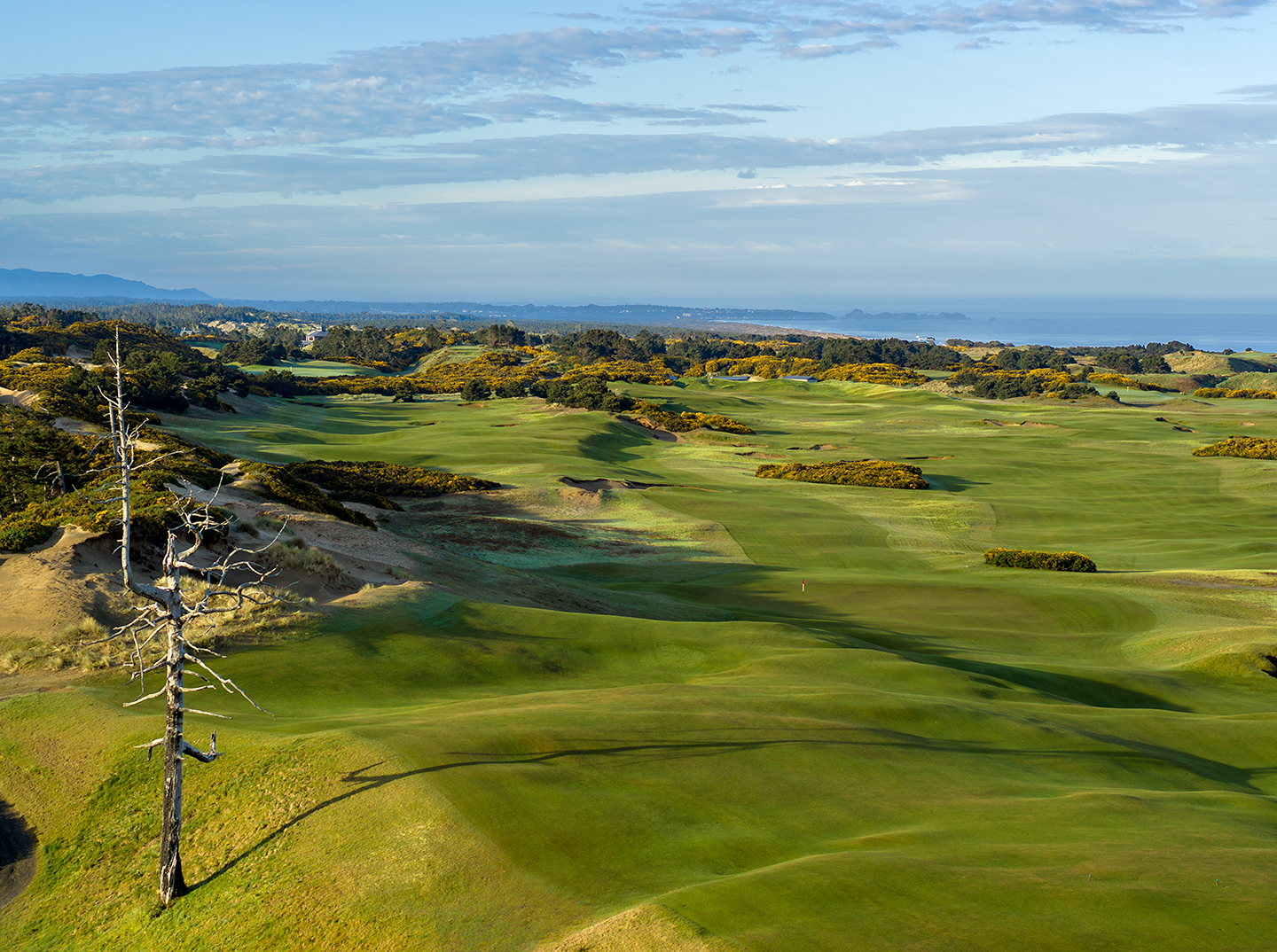
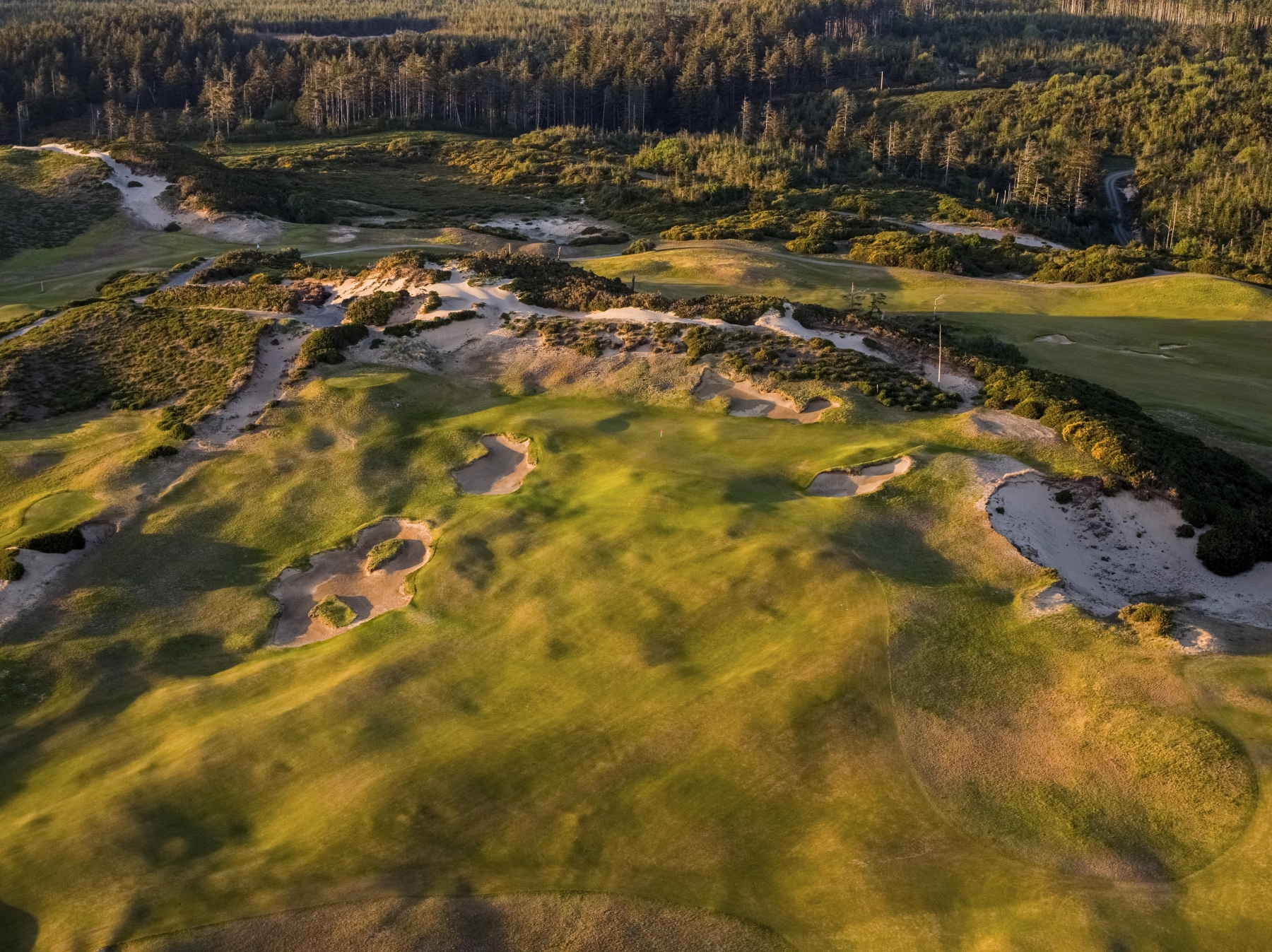
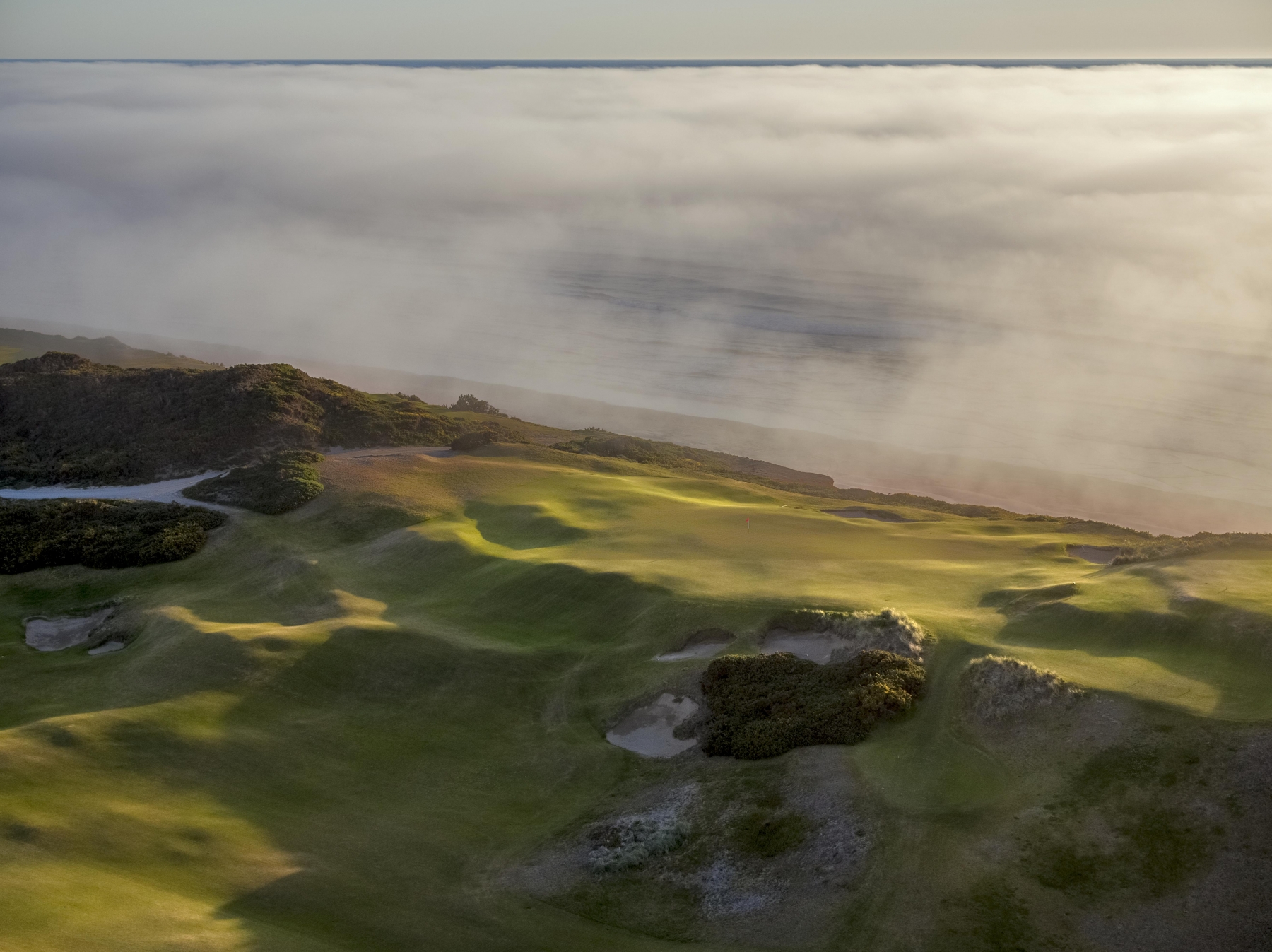
Old Macdonald poses a provocative question -- what would Charles Blair Macdonald, the father of American golf architecture, have built if the Oregon coast had been his canvas? Tom Doak and Jim Urbina answered by studying Macdonald's template holes and reinterpreting them across vast, windswept terrain with enormous greens averaging over 10,000 square feet. The result is a course of bold geometric shapes, fierce diagonal bunkering, and multiple angles of play on every hole.
History
Old Macdonald at Bandon Dunes Golf Resort is among the intellectually ambitious golf course designs of the early twenty-first century — a course built as a tribute to Charles Blair Macdonald, the father of American golf architecture, using the principles and template holes that Macdonald developed a century earlier and applying them to the extraordinary coastal terrain of southern Oregon. The course opened in 2010 as the fourth major design at Bandon Dunes, designed by Tom Doak and Jim Urbina. The creative premise was deceptively simple: what would Macdonald have built had the Oregon coast been his canvas? Rather than creating a faithful replica of any specific Macdonald course, Doak and Urbina set out to identify spots on the Bandon headlands where the existing topography resembled the site conditions that Macdonald had worked with at the National Golf Links of America, the Lido, and his other designs, then build versions of his template holes that felt native to their Oregon setting rather than transplanted from Scotland or Long Island. Charles Blair Macdonald was the founding figure of American golf course architecture and a founding member of the USGA. He had spent years studying the great holes of the British Isles before building the National Golf Links of America on Long Island beginning in 1906, which opened in 1911 and remains among the most influential courses in American history. Macdonald's design philosophy centered on "template holes" — strategic archetypes derived from the game's best British examples, including the Redan (from North Berwick), the Alps (from Prestwick), the Eden (from St. Andrews), and the Biarritz (from a French course of the same name).
Doak and Urbina used these same templates as their framework at Old Macdonald, building versions of the Short, Redan, Eden, and Biarritz par threes alongside longer holes derived from St. Andrews's Road, Long, and Heathery holes. The course features enormous greens — the largest at Bandon Dunes by a substantial margin — with the exaggerated scale that Macdonald employed to create complex strategic problems within each putting surface. The most celebrated feature is the double green shared by the fifth and tenth holes, an enormous putting surface of approximately 45,000 square feet that serves both holes simultaneously — a direct reference to the Old Course at St. Andrews, where the course's original design shares greens between the outgoing and incoming nines. The fifth hole, a par three of approximately 350 yards, is inspired by the 11th at St. Andrews. The Long hole, the 14th, references the 14th at St. Andrews with a routing that turns toward home and introduces the wind as a primary strategic variable. Old Macdonald plays to a par of 71 and stretches past 6,900 yards from the back tees. Its exposed position on the Oregon headlands — slightly inland from the Pacific but fully subject to the coastal winds — makes conditions highly variable from day to day and hour to hour, requiring strategic adaptation that complements the intellectual demands built into the design. Golf Digest ranked it immediately among the top courses in Oregon upon opening, and it has appeared consistently in national rankings of public-access courses since then. Within the Bandon Dunes portfolio — alongside Bandon Dunes, Pacific Dunes, Bandon Trails, and Sheep Ranch — Old Macdonald holds a distinctive position as the course most explicitly rooted in the history and theory of golf course architecture.
Where the other courses at the resort drew their inspiration primarily from the landscape itself, Old Macdonald drew its inspiration from a man — Macdonald — and from the intellectual tradition he established. The result is a course that plays as a meditation on the history of the game's greatest strategic ideas as much as an engagement with the specific landscape of the Oregon coast. When the Pacific winds arrive — which at Bandon Dunes is most of the time — the effective length increases dramatically, transforming approach clubs and demanding the low, piercing ball flight that characterized play on the original courses Old Macdonald celebrates.