Ohoopee Match Club
275 Beaver Creek Farm Rd, Cobbtown, GA 30420Designed by Gil Hanse · Jim Wagner · Est. 2018

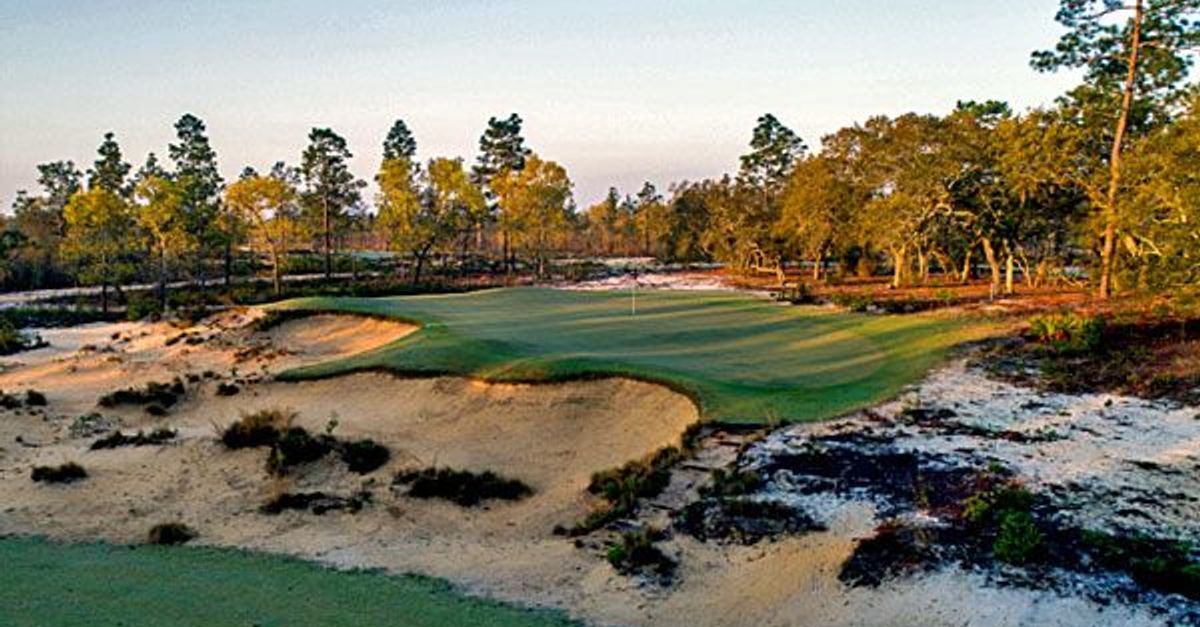
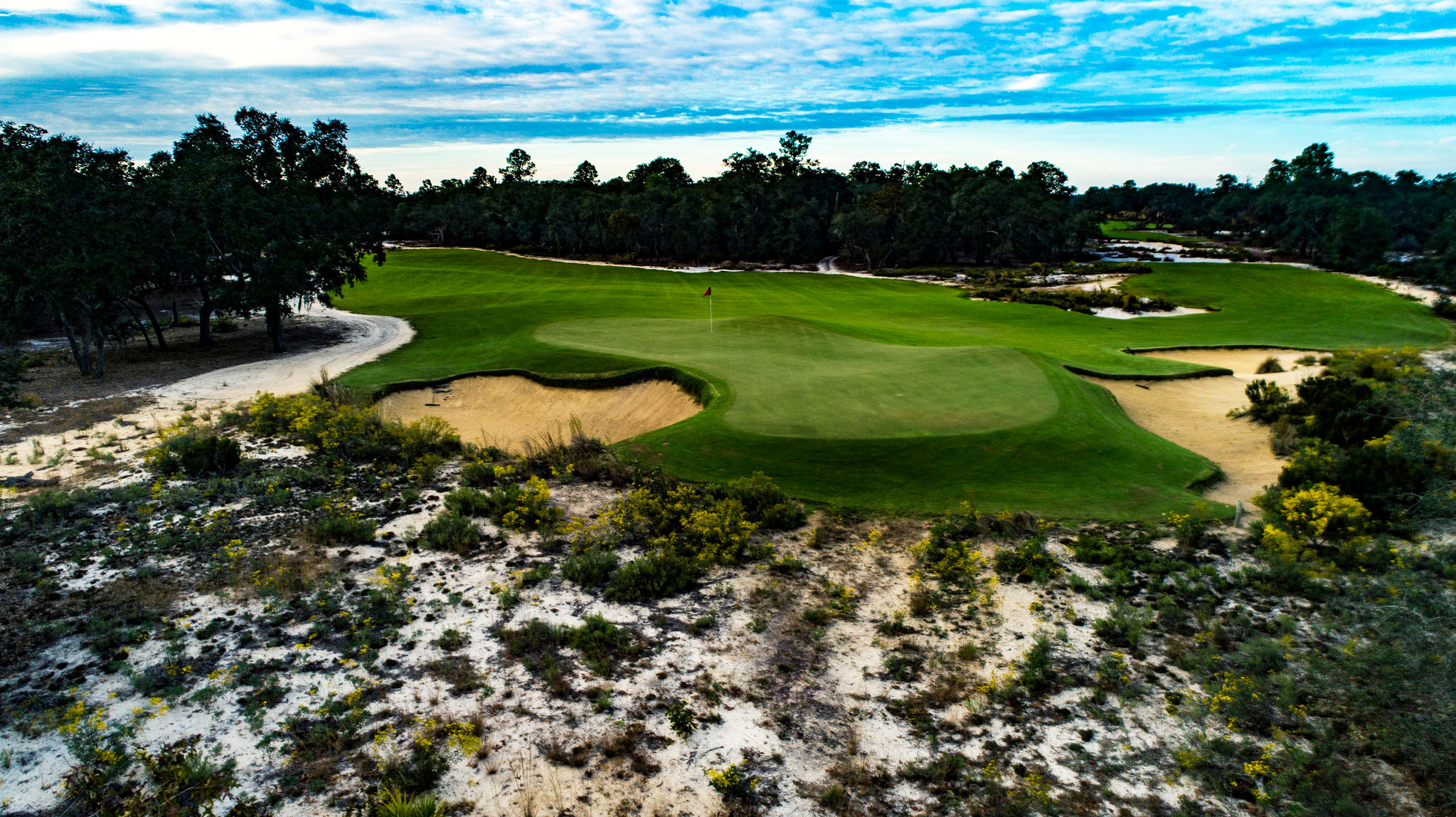
Built on a former onion farm and hunting plantation in rural Georgia, Ohoopee exists for one purpose: match play in its purest form. Gil Hanse designed 22 holes across the sandy Tattnall County landscape — including par-4.5 and par-3.5 holes, because when only the hole matters, stroke totals are irrelevant. No residences, no pool, no tee times — just golf as a contest between friends.
History
Ohoopee Match Club is the product of a simple, radical idea: build a golf course purely for the joy of match play, liberate the architect from the conventions of stroke-play design, and see what happens. What happened, on 3,500 acres of sandy savanna in rural Tattnall County, Georgia, was something genuinely unlike anything else in American golf -- a 22-hole layout where the scorecard lists half-par holes, where an alternate routing swaps in five completely different holes, and where the entire enterprise is oriented around the drama of one golfer against another rather than the arithmetic of a medal score.
The club is the creation of Michael Walrath, a technology entrepreneur and investor who purchased the property in 2016. The land sits approximately one hour west of Savannah, near the small town of Cobbtown, along the banks of the Ohoopee River. For decades, the property had served as a hunting plantation, and its natural features -- Kershaw sand that drains at a remarkable twenty inches per hour, gently rolling terrain dotted with mature live oaks and loblolly pines, heath-like ground cover, natural dunes, and a large lake -- had been largely undisturbed. When Gil Hanse first examined the site as far back as 2006, he recognized it immediately as ideal for golf. The sandy soil, the subtle elevation changes, and the spacious corridors between stands of trees reminded him of the great sandbelt courses of the American Southeast, with echoes of Pinehurst and Pine Valley in the landscape. Walrath engaged Hanse and his design partner Jim Wagner to build the course, but the directive was deliberately unconventional. Rather than designing a standard 18-hole layout calibrated for stroke play and tournament golf, Walrath asked Hanse and Wagner to throw standardization out the window. The focus would be on creating holes that were fun, sporty, and likely to prove pivotal in head-to-head competition. Every design decision was filtered through the lens of match play: Would this hole create interesting tactical dilemmas between two opponents? Would it reward boldness while keeping conservative play viable? Would it generate the swings of fortune and momentum that make match play the most compelling format in golf?
The result, which opened for play in October 2018, is a course that operates by its own internal logic. The layout features 22 holes across the main routing, with an additional five alternate holes designated A through E that form part of the "Whiskey Routing." The primary routing includes holes with fractional par designations: the second hole, a sweeping dogleg around the main lake, is listed as a par 4.5. The third, a longer hole with gaping bunkers guarding the layup zone, plays as a par 5.5. The ninth and fourteenth are par 3.5s -- driveable par fours where the aggressive play at the green from the tee is tantalizing but fraught with danger. These half-par designations are not gimmicks; they reflect the genuine strategic ambiguity of the holes, where the correct play depends on your opponent's position, the match situation, and your own appetite for risk.
Hanse and Wagner were blessed with extraordinary terrain and they used it masterfully. Long expanses of sandy waste areas, dotted with native plants and wiregrass, line the holes and create dramatic visual contrasts against the green fairways. Deep, foreboding sand pits appear throughout the course, but they are mostly positioned on the far perimeter of holes, punishing truly errant shots while leaving the strategic corridors open for bold play. The mid-iron par threes at the fifth and sixteenth are standouts, each played across complex sandy wastelands into nearly island greens set beyond expanses of sand. The fourteenth, one of the par 3.5 holes, bears a resemblance to Hanse's acclaimed fifth hole at Boston Golf Club, with a push-up green featuring an extremely narrow waistline, deep trouble lurking to the right, and tricky chipping hollows on the left. The eleventh hole, nicknamed "Hell's Full-Acre," is a par five of 562 yards from the back tee that serves as one of the routing's anchor holes. The A hole features a fabulous punchbowl green with a back-left corner hidden from view. The B hole is a 350-yard par four where Hanse left a towering oak directly in front of the elevated green, just 38 yards short of it, forcing golfers to choose whether to play over, around, or through the tree's branches. After consecutive par threes at C and D, the E hole plays the eleventh from a forward tee of just 298 yards, transforming a par five into a reachable par four with entirely different strategic implications.
Ohoopee is a walking-only club. Golf carts are not permitted, and the flat-to-gently-rolling terrain makes walking a pleasure rather than a chore. The club operates seasonally, from mid-September through mid-June, avoiding the brutal heat and humidity of Georgia's summers. Membership is by invitation only, and the club maintains a deliberately small roster. The emphasis is on camaraderie, on groups of friends testing themselves against each other in match play, on the kind of informal, spirited competition that has always been golf's most natural format but that the modern tournament circuit has pushed to the margins. The golf world noticed immediately. Ohoopee Match Club won Golf Digest's Best New Private Course award for 2019, finishing ahead of Tom Fazio's Summit Club in Las Vegas, TPC Colorado, Pete Dye's final full design at Links at Perry Cabin, and Aberdeen Golf & Country Club. The recognition confirmed what those who had played the course already knew: Hanse and Wagner had created something special in the Georgia sandhills, a layout that felt both entirely original and deeply connected to the game's oldest traditions. Gil Hanse has described Ohoopee as a deeply satisfying project of his career, precisely because the match-play mandate freed him from the constraints that typically govern course design. Without the need to produce a "fair" stroke-play test with balanced nines and a par of 72, he and Wagner could design holes purely for their drama, their visual impact, and their capacity to generate pivotal moments between opponents. The fractional pars, the alternate routing, the 22-hole layout -- these are not novelties but natural consequences of designing for match play rather than medal play.
Ohoopee Match Club represents a return to something fundamental about golf. Before stroke play became the dominant competitive format in the twentieth century, match play was how the game was played. The oldest competitions in golf -- the Amateur Championship, the early Open Championships, the great money matches of the nineteenth century -- were match-play affairs. In designing a course specifically for this format, on land that seems purpose-built for the game, Hanse and Wagner have created a reminder of what golf can be when it sheds the constraints of convention and focuses on the simple, timeless pleasure of one player against another.