Fishers Island Club
20449 E Main Rd, Fishers Island, NY 06390Designed by Seth Raynor · Est. 1926
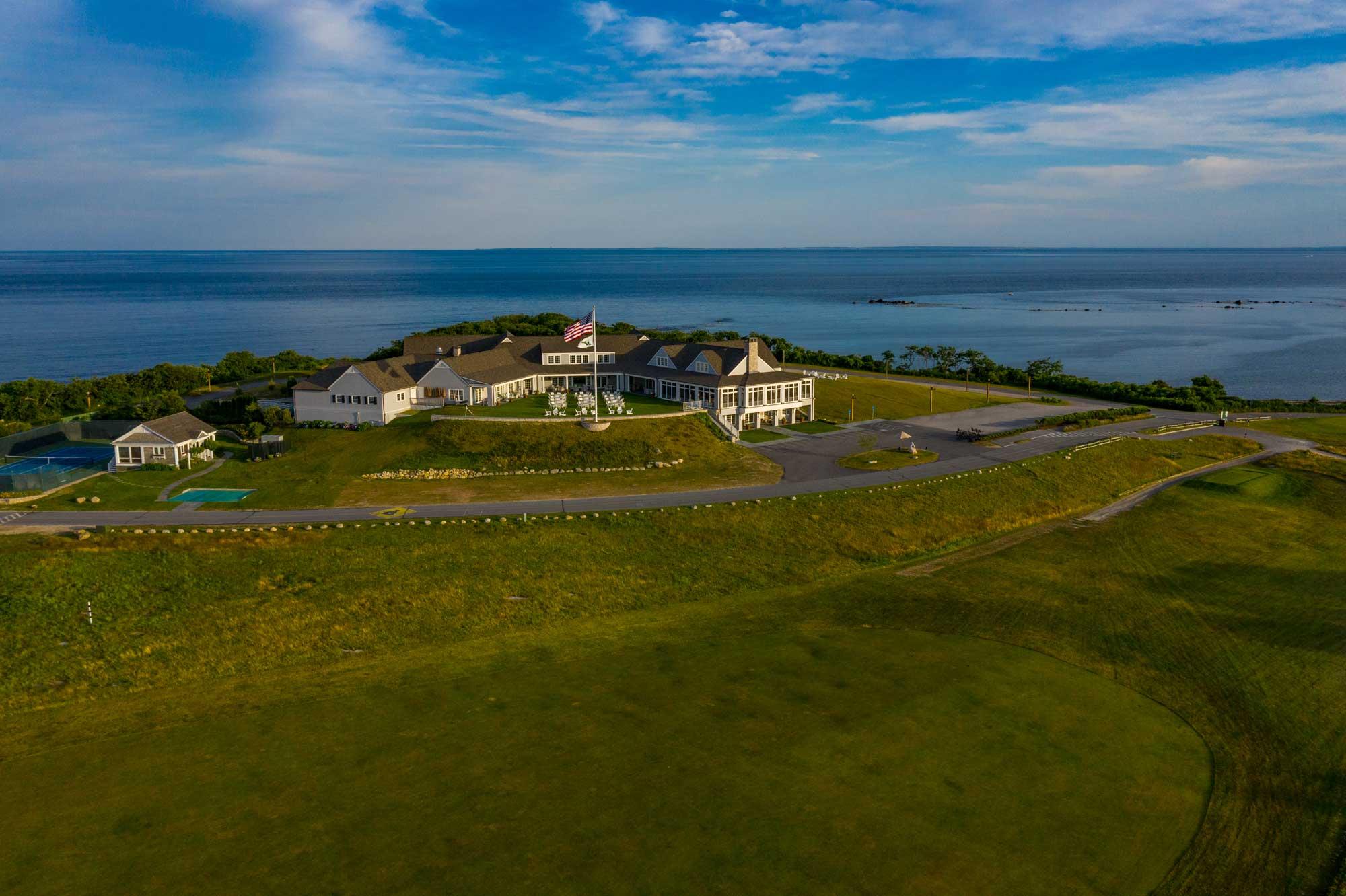
Seth Raynor died six months before this course opened in 1926, and he never saw his masterpiece completed — his protege Charles Banks faithfully finished what may be the greatest collection of template holes ever assembled. Accessible only by ferry or private boat, Fishers Island offers saltwater views from every tee and every green, with the rocky Long Island Sound shoreline and constant wind elevating Raynor's Redan, Biarritz, and Punchbowl into something transcendent.
History
Fishers Island Club is the final masterpiece of Seth Raynor, the surveyor-turned-architect whose body of work helped define the template school of American golf course design. Raynor died suddenly in January 1926 at the age of fifty-one, six months before the course he had laid out on the eastern tip of Fishers Island, New York, officially opened for play. He never saw the finished holes, the turf grown in, or the sunlight catching the waters of Long Island Sound beyond his geometric greens. His associate Charles Banks supervised the completion of construction, bringing to life a design that stands as the crowning achievement of the Macdonald-Raynor lineage and among the most dramatically sited courses in American golf. The origins of Fishers Island Club trace to the Ferguson family, who in the mid-1920s envisioned a seasonal resort community on the east end of the island, a narrow strip of land approximately nine miles long lying in the waters between Long Island Sound and Block Island Sound, roughly three miles off the Connecticut coast. The development was modeled after Mountain Lake in Lake Wales, Florida, another private community with a golf course as its centerpiece. The Fergusons retained Seth Raynor to design the golf course, recognizing that his signature style -- bold geometric bunkering, mathematically precise greens, and holes modeled after the great originals of British and European golf -- would create a layout of lasting distinction. Raynor began work on the approximately 1,600-acre property in 1925, laying out a routing that capitalized on the island's rugged coastline, its rolling terrain, and its exposure to the sea winds that sweep across the Sound. Raynor's design philosophy was rooted in the teachings of Charles Blair Macdonald, the father of American golf architecture, for whom Raynor had originally worked as a surveyor during the construction of the National Golf Links of America in Southampton, New York. Macdonald believed that the finest golf holes in the world -- the Redan at North Berwick, the Alps at Prestwick, the Road Hole at St. Andrews, the Biarritz hole designed by Willie Dunn in France -- embodied timeless strategic principles that could be adapted to any terrain. Raynor absorbed this philosophy and became its most prolific practitioner, building courses across the eastern United States that featured his portfolio of template holes: the Redan, Cape, Short, Biarritz, Eden, Alps, Punchbowl, Double Plateau, Knoll, Long, and Road. At Fishers Island, Raynor had terrain that elevated these templates beyond anything he had achieved before. The eastern end of the island offered a waterfront property with tremendous natural land movement -- rolling elevations, coastal bluffs, and dramatic grade changes that gave his geometric designs a wild, almost untamed quality. His routing maximizes the number of holes along the water, with the stretch from the fourth through the seventh playing directly along the shoreline of Long Island Sound. His steeply banked bunkers and angular greens harmonize with the panoramic views of the ocean, creating a visual and strategic experience that is singular among American courses. The fourth hole is a par four that ranks among the finest two-shot holes Raynor ever designed. It plays along the sea, with the approach shot descending to a hidden punchbowl green set against the craggy coastline. The fifth is a Biarritz-style par three that captures the vertiginous thrill of the original hole at the Biarritz Golf Club in France, with both the tee and the large, square green elevated on either side of a yawning chasm. The tee shot demands courage and precision, as the expanse between tee and green offers nothing but wilderness.
The ninth hole is a Double Plateau green with what golfers describe as an "infinity edge" effect, the putting surface appearing to drop off into Long Island Sound behind it. One of the overlooked strengths of Raynor's routing is its directional variety. Nearly every hole plays in a different compass direction, which means that the wind -- the course's most potent natural defense -- affects each hole differently. A southwesterly breeze might aid the golfer on one hole and punish him on the next, demanding constant adjustment and creative shotmaking. Raynor employed only two fairway bunkers on the entire course, relying instead on the natural land movement to serve as the primary fairway hazard. This restraint gives the course a visual openness that belies its strategic complexity. The course that Charles Banks completed in 1926 measured approximately 6,636 yards at par 70, and it has remained largely faithful to Raynor's original vision in the century since. Unlike many courses of similar vintage, which have been stretched, rerouted, or radically redesigned to accommodate modern equipment, Fishers Island has resisted wholesale alteration. The club has maintained the integrity of Raynor's bunkering, green contours, and routing, understanding that the strategic principles embedded in the template holes are timeless rather than era-dependent. Access to Fishers Island itself contributes to the club's distinctive character.
The island is reached by a daily ferry service from New London, Connecticut, by private aircraft landing at the island's small airstrip, or by private vessel docking at the island's harbor. There are no bridges to the mainland. This geographic isolation has preserved a quiet, unhurried atmosphere that contrasts with the intensity of the golf. The club operates seasonally, typically from late spring through early fall, and its membership is drawn largely from families with longstanding ties to the island community. Fishers Island Club's ranking among American courses has climbed steadily in the modern era as the broader golf world has come to appreciate the depth and ingenuity of Raynor's template approach. Where these holes were once dismissed by some critics as formulaic reproductions, contemporary understanding recognizes them as sophisticated strategic puzzles that reward creative play and intelligent course management. At Fishers Island, Raynor proved that templates are not limitations but frameworks -- starting points from which a gifted architect can create something that transcends the original. The dramatic coastal setting, the variety of the wind, and the quality of the individual holes combine to produce a golfing experience that has few peers anywhere in the world. It is fitting that the course Raynor never saw completed has become the work for which he is best remembered.