Essex County Club
153 School St, Manchester-by-the-Sea, MA 01944Designed by Donald Ross · Est. 1893
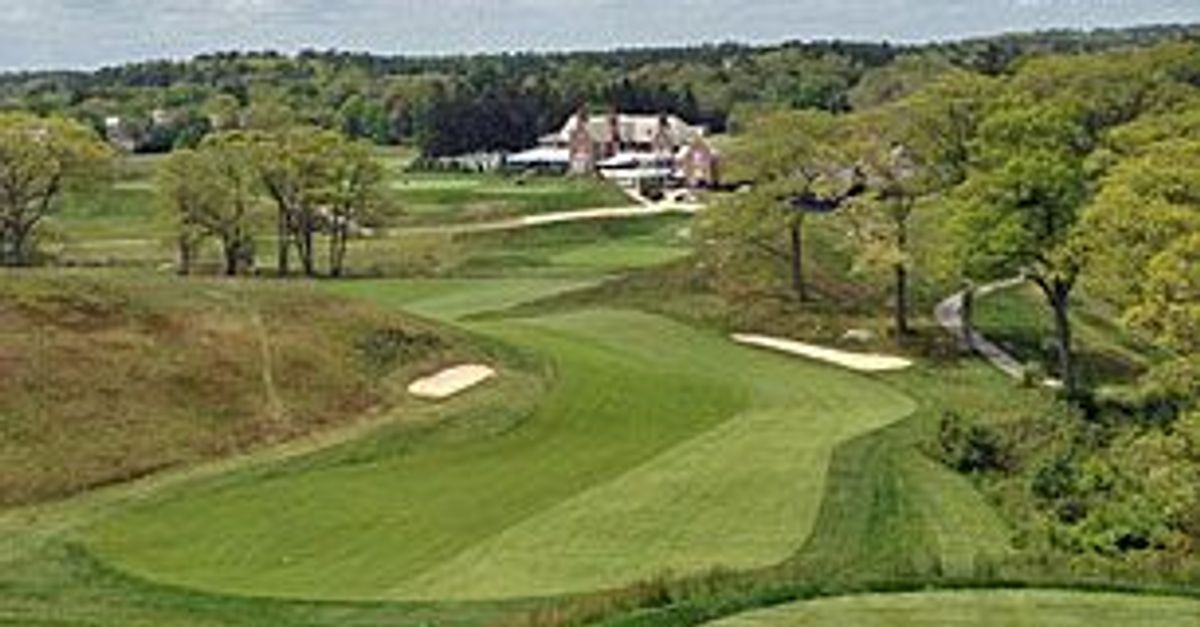
Essex County Club is a historic Donald Ross design on Massachusetts' North Shore, overlooking the Atlantic Ocean near Manchester-by-the-Sea. Founded in 1893, it is one of the oldest and most storied clubs in New England.
History
Essex County Club in Manchester-by-the-Sea, Massachusetts, holds a singular place in the history of American golf. Founded in 1893, it was among the very first golf clubs established in the United States, and its early embrace of the game helped seed the sport across New England's North Shore at a time when golf was still a novelty on American soil. The club was the sixth to join the United States Golf Association, the first admitted after the original five founding member clubs. That distinction alone speaks to Essex County's pioneering role, but the club's significance extends far beyond its age. It is the place where Donald Ross, the most prolific and influential golf course architect in American history, lived and worked during a formative period of his career, and the course he left behind remains one of his most personal and carefully considered designs. The original clubhouse was completed in 1893, and the grounds initially served as a broad social club for the summer residents of Manchester-by-the-Sea, featuring a full-size polo field, two clay tennis courts, and a nine-hole golf course. An eighteen-hole layout was created in 1900, attributed to the combined efforts of Herbert Leeds, John Duncan Dunn, and Walter Travis, but it was the arrival of Donald Ross that would define the club's golfing identity for the next century and beyond. George Willett, the club's golf chairman, had studied under Ross at Oakley Country Club and recognized in him the talent to elevate Essex County's golf course to something exceptional. Ross was hired in 1908 and began an extensive redesign that would occupy him for nearly a decade. He served as the club's head professional from 1909 to 1913, living full-time on the property in a yellow house that still stands near what is now the second green, approximately seven paces from the fifteenth tee. This extended residency was unusual for Ross, who by that time was managing projects across the country from his base in Pinehurst, North Carolina. With the exception of his work at Pinehurst itself, Ross probably spent more time personally overseeing the holes at Essex County than at any other course he designed.
He expanded the layout, redesigned existing holes, and continued returning to refine his work until it was completed in 1917. The entire project was executed with ox and manpower in the pre-mechanized era of golf construction, a detail that underscores both the ambition and the craftsmanship of the endeavor. The course that Ross created is a par-70 layout stretching approximately 6,500 yards from the back tees, with a slope rating of 136 and a course rating of 72.5. These are modest numbers by modern standards, but they mask a design of considerable subtlety and challenge. Ross routed the holes across dramatic New England topography with elevation changes exceeding seventy feet on some holes, weaving fairways through corridors of native vegetation and across the rolling terrain of the North Shore. The fairways are wide, allowing multiple angles of attack, but the crowned greens are the course's great defense. They are designed to shed poorly struck approach shots off their edges, rewarding precise iron play and punishing anything less with difficult recovery shots from closely mown surrounds and strategically placed bunkers. The variety of Ross's bunker work at Essex County is exceptional even by his own high standards. The course features mammoth fairway bunkers, deep pit bunkers, waste areas, and intricate greenside complexes, each one integrated naturally into the terrain rather than imposed upon it. Ross wrote in 1914 that his standard was to "build each hole in such a manner that it wastes none of the ground at my disposal, and takes advantage of every possibility." Essex County is a vivid demonstration of that philosophy. Among the individual holes, the third is perhaps the most historically significant. The club maintains that its third green, created in 1893 and preserved by Ross in his remodel, is the oldest putting surface in continuous existence in North America.
The hole is now a 625-yard par five, and members affectionately refer to the green as "the bathtub" due to a distinctive deep depression on its left-center. Remarkably, the hole has been lengthened only eight yards since Ross designed it. The eleventh hole, a 175-yard uphill par three, is widely regarded as a distinguished one-shot hole Ross ever created among the approximately one thousand he designed over his career. Its green, which players describe as resembling the deck of a sinking ship, demands a precisely struck tee shot and offers no easy recovery from a miss. The eighteenth is a memorable closer, a downhill hole with an inverted-saucer green from whose elevated tee the Boston skyline is visible on clear days. Essex County Club holds a distinctive place in the history of women's golf. The club admitted women from its founding, and among its early members were Margaret and Harriot Curtis, daughters of founding member Greeley Curtis. The two sisters became accomplished competitive golfers, winning four U.S. Women's Amateur titles between them from 1906 to 1912, with Margaret's third and final victory coming at Essex in 1912. In 1932, the Curtis sisters donated the cup that bears their name, establishing the Curtis Cup as the leading international team competition for amateur women golfers from the United States and Great Britain-Ireland. It was fitting, then, that Essex County hosted the third playing of the Curtis Cup in 1938 and welcomed the competition back in 2010 for a second hosting. The 2010 course setup measured only 180 yards longer than it had in 1938, a testament to the enduring quality of Ross's design.
The club also hosted the U.S. Women's Amateur in 1897 and 1912, and the U.S. Women's Mid-Amateur in 1995. Essex County also holds the distinction of having employed Joe Lloyd, the 1897 U.S. Open champion, as one of its seven head professionals over the club's history. In the modern era, the course has benefited from careful restoration work led by Renaissance Design's Bruce Hepner, who undertook a comprehensive project from approximately 2001 to 2010. Hepner expanded playing surface widths on greens and fairways, thinned tree lines that had encroached on Ross's intended sight lines, and exposed fescue-covered mounds and natural contours that had been obscured over decades of maintenance changes. A special town permit dating to 1991 restricts pesticide and fertilizer usage on the property, which sits above the town's aquifer. The club operates at ninety-eight percent natural organic fertilizer with minimal chemical plant protectants, a constraint that has helped maintain the firm, fast playing conditions that Ross would have intended. The course today remains substantially as Ross left it in 1917, a testament both to the quality of his original vision and to the club's commitment to preserving it. With its deep roots in the earliest days of American golf, its connection to the Curtis Cup, its environmental stewardship, and a design that continues to challenge and delight after more than a century of play, Essex County Club occupies a place of genuine historical importance in the game.