Calusa Pines Golf Club
2000 Calusa Pines Dr, Naples, FL 34120Designed by Michael Hurdzan · Dana Fry · Est. 2001
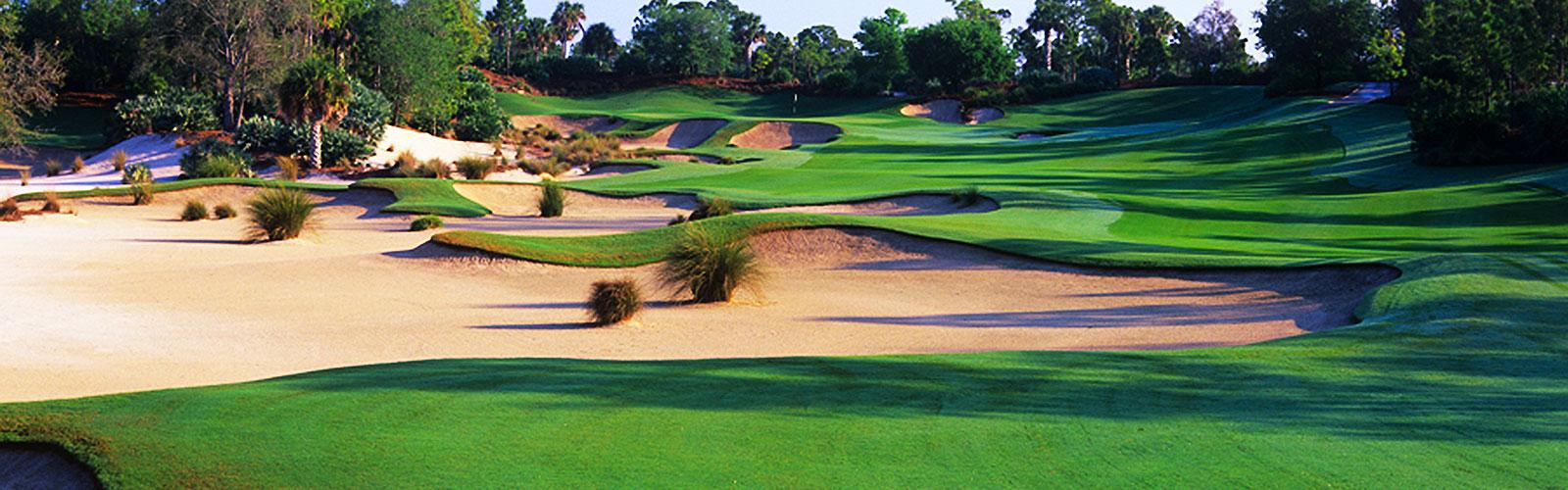
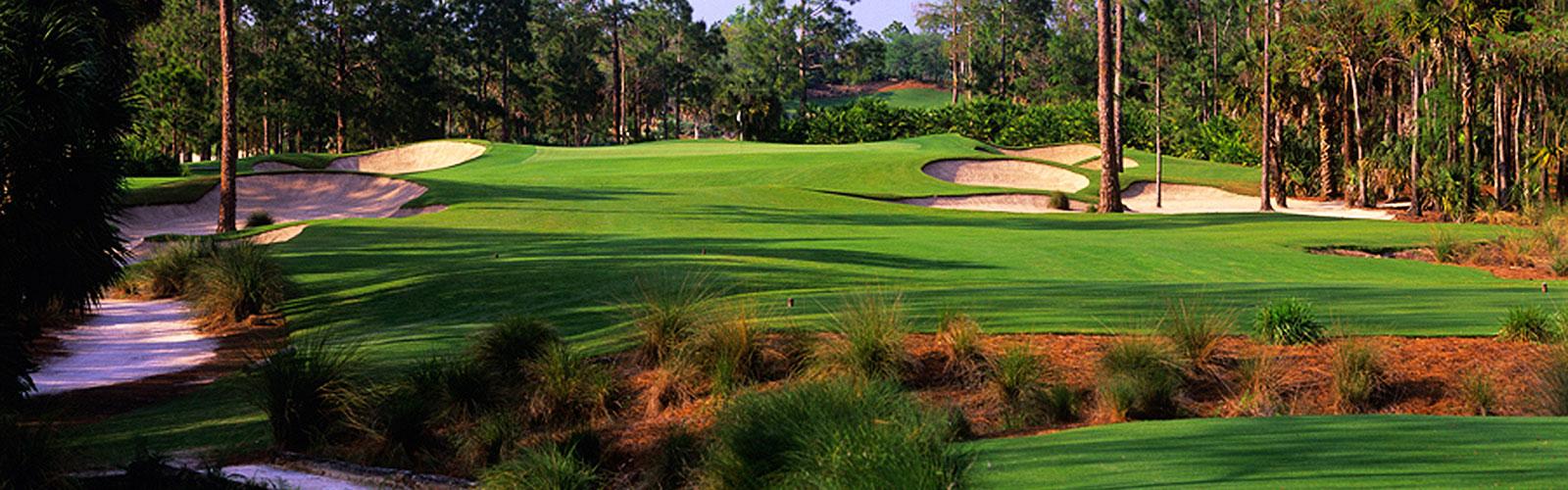
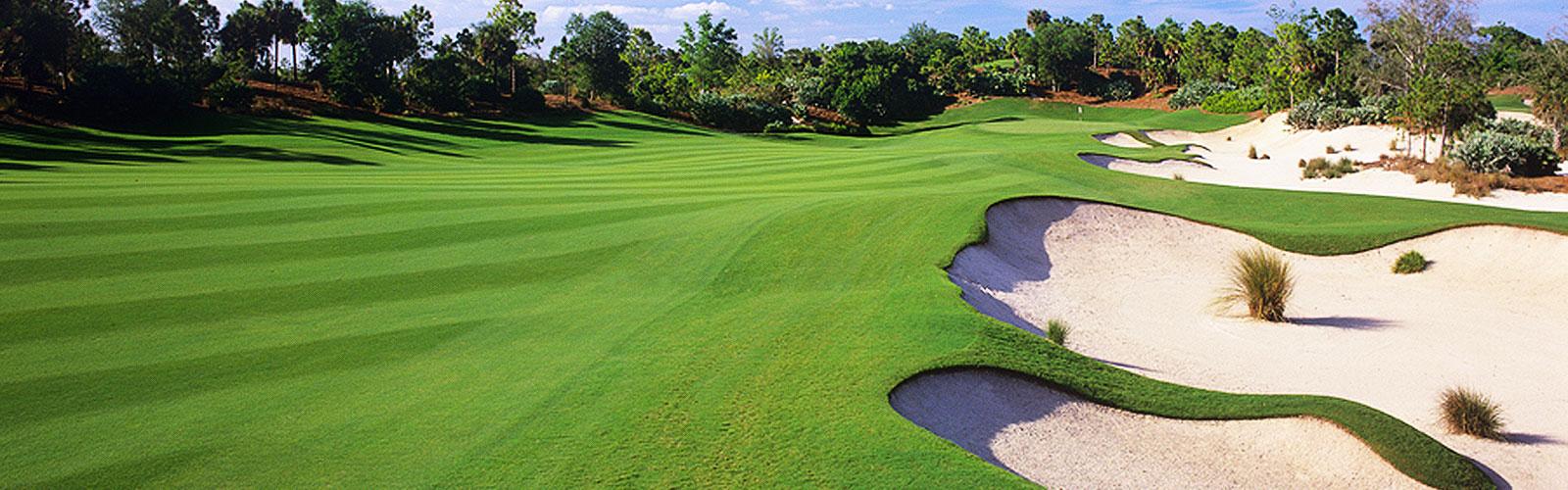
Where Southwest Florida is flat, Calusa Pines is not — and that is entirely by design. Founder Gary Chensoff gave Hurdzan and Fry a blank check and a flat Naples property; they blasted through limestone, dug 72 acres of lakes, and piled the fill into 58-foot ridgelines planted with transplanted oaks and slash pines. The result looks like it has been there for generations and plays like nothing else south of Orlando.
History
Calusa Pines Golf Club is among the topographically audacious golf courses built in Florida during the early twenty-first century — a Michael Hurdzan and Dana Fry design that transformed 550 acres of completely flat terrain into a course of extraordinary elevation change through a construction program of unusual engineering ambition. The club opened in November 2001 in eastern Naples, Collier County, designed by Michael Hurdzan and Dana Fry for developer Gary Chensoff, a Chicago venture capitalist who challenged the architects to create the most unique course in South Florida despite a dead-flat site. The fundamental challenge that Hurdzan and Fry faced was one of Florida's most persistent design limitations: the state's predominantly flat, sandy terrain, with a water table close to the surface, restricts the elevation change available to course designers and produces, on most Florida courses, the artificially mounded aesthetics that have characterized the state's golf landscape for decades. Hurdzan and Fry chose a different approach at Calusa Pines. They blasted into the coral rock substrate — spending approximately one million dollars on dynamite alone — to create ponds deep enough to provide the fill material necessary for genuine elevation movement throughout the course. Seventy-two acres of pristine lakes were carved from the limestone, and the extracted material was used to build the landforms that define every fairway and approach on the course.
The excavation program produced 58 feet of total elevation change across the property — the highest point of land in South Florida at the time of construction, and a figure that makes Calusa Pines virtually incomparable as a terrain experience within the state. The fill extracted from the pond excavations was redistributed across the fairways and green sites to create slopes, ridges, and approach angles that bear no resemblance to Florida's natural landscape. The result is a course that plays more like a Carolina Sandhills design — with genuine uphill and downhill approaches, contoured fairway landing zones, and greens set on elevated pads with dramatic falloffs — than the flat, water-dominated layouts that dominate the Florida market. The course's most memorable feature is its eighth green, where a 27-foot-tall bunker rises from the left side of the putting surface — a sand formation of exceptional scale that creates among the visually striking approach shots in Florida golf. Elsewhere on the course, Hurdzan and Fry deployed their excavated topography to create approach angles that require genuine strategic thought: tee shots must be positioned to create specific angles to elevated greens, and the firmness of the playing surfaces means that approach shots carrying to incorrect sections of the green are redirected away from pins rather than stopping where they land. The Bermuda fairways and greens are maintained to some of the firmest, fastest conditions in Florida, further enhancing the course's resemblance to Sandhills-style play.
The mature oaks, pines, and sabal palms transplanted onto the constructed ridgelines have grown into the landscape sufficiently that the artificial origin of the terrain is no longer evident — the course reads as a naturally hilly property. Golf Digest ranked Calusa Pines as the twentieth-best course built since 2000 among all American courses — the highest ranking for any Florida course on that list — and also cited it as one of the top ten best new private clubs in the United States upon opening. Calusa Pines does not host professional or USGA championships, but it ranks consistently among the top private courses in Florida in Golf Digest's state rankings. Its position in the national top 100 of private courses reflects the judgment of golf's most informed architectural evaluators that Hurdzan and Fry's engineering solution to Florida's natural limitations produced a course of genuine distinction — one that plays, in critical respects, as if it were built somewhere other than the flattest major golfing state in the country.
The course stands as proof that with sufficient investment and engineering creativity, Florida can produce golf architecture of the first order. The mature landscape, the engineered topography, and the uncompromising conditioning standards together explain why Calusa Pines has sustained its ranking position across two decades.