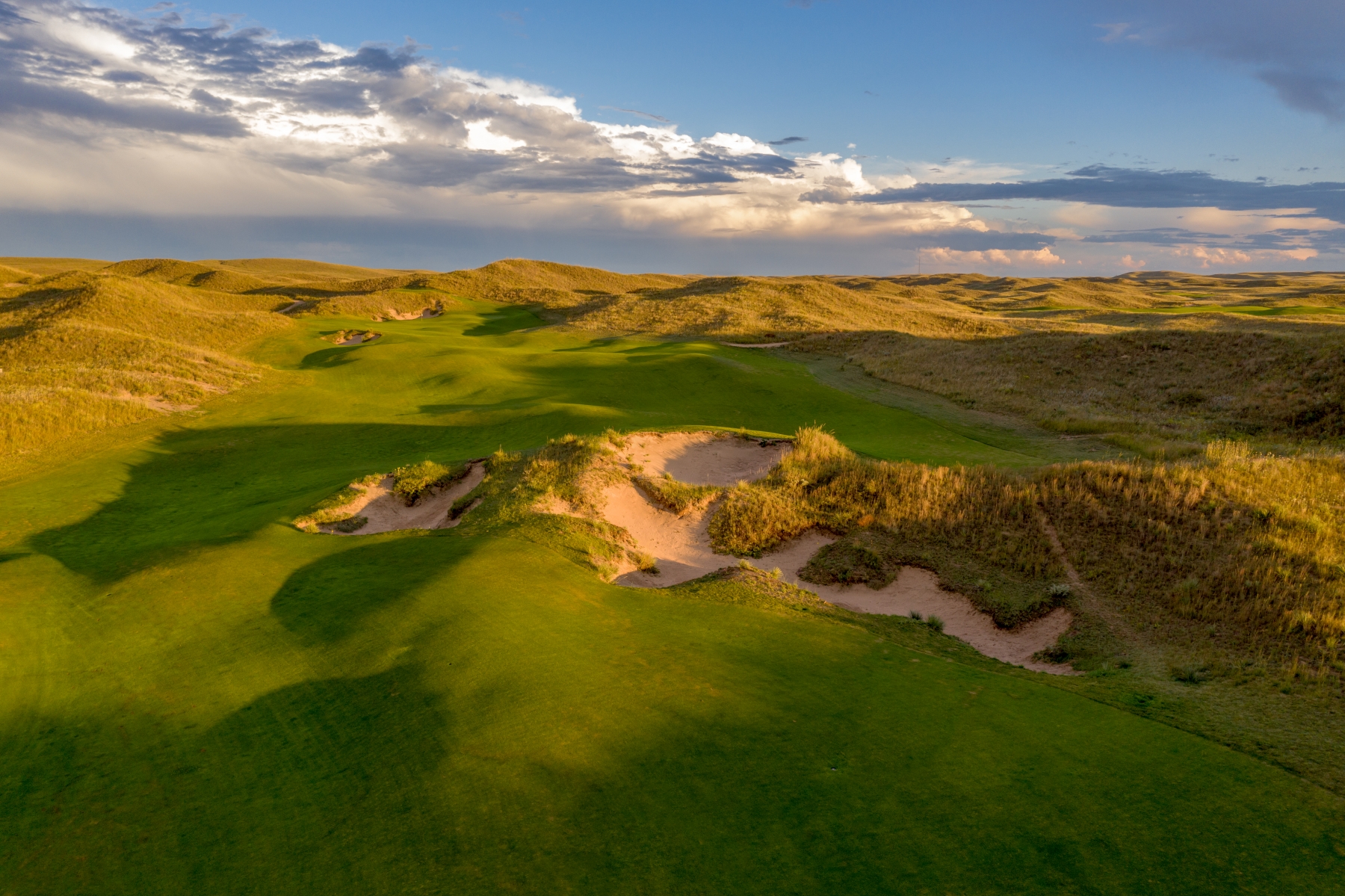
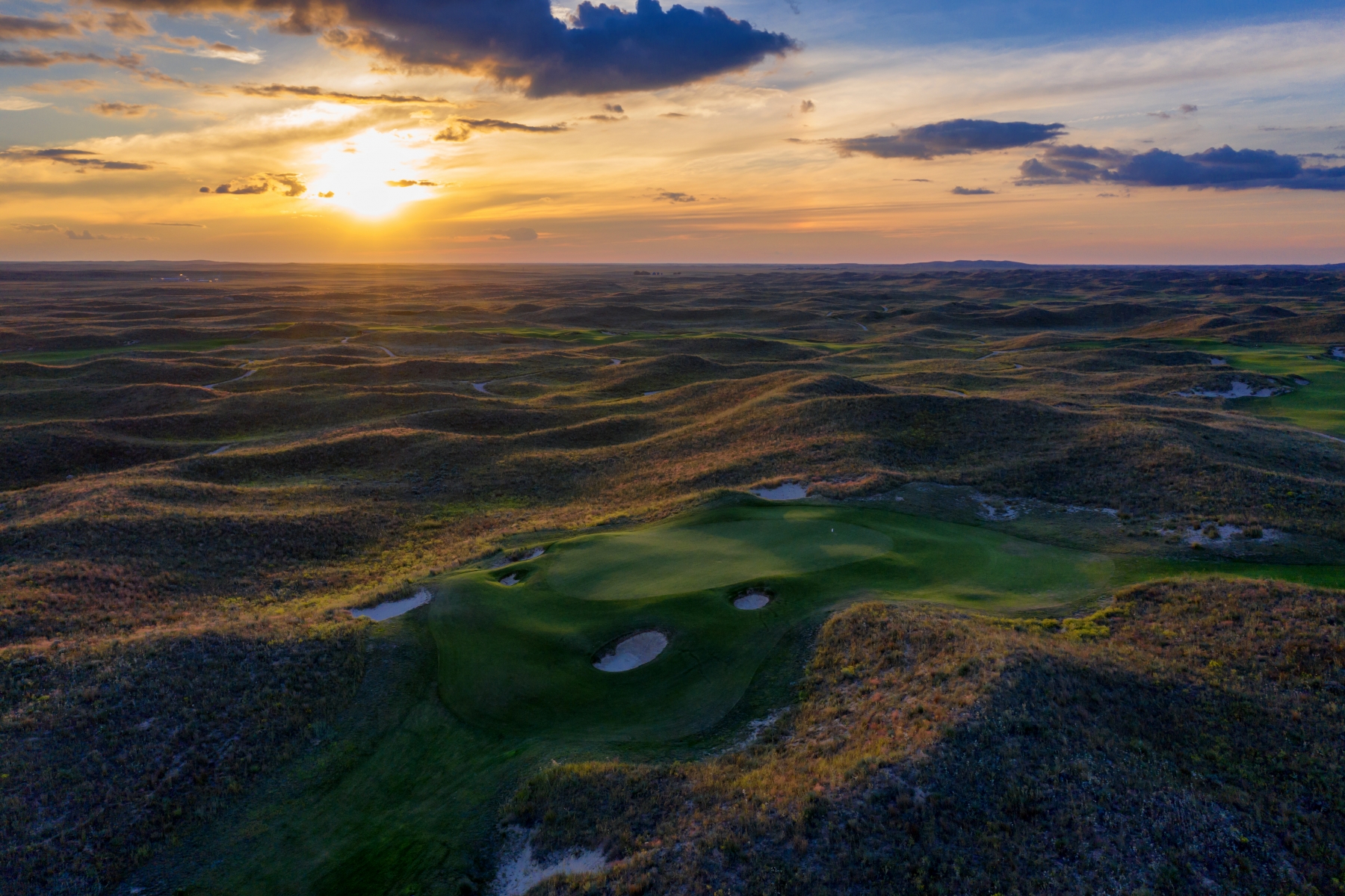
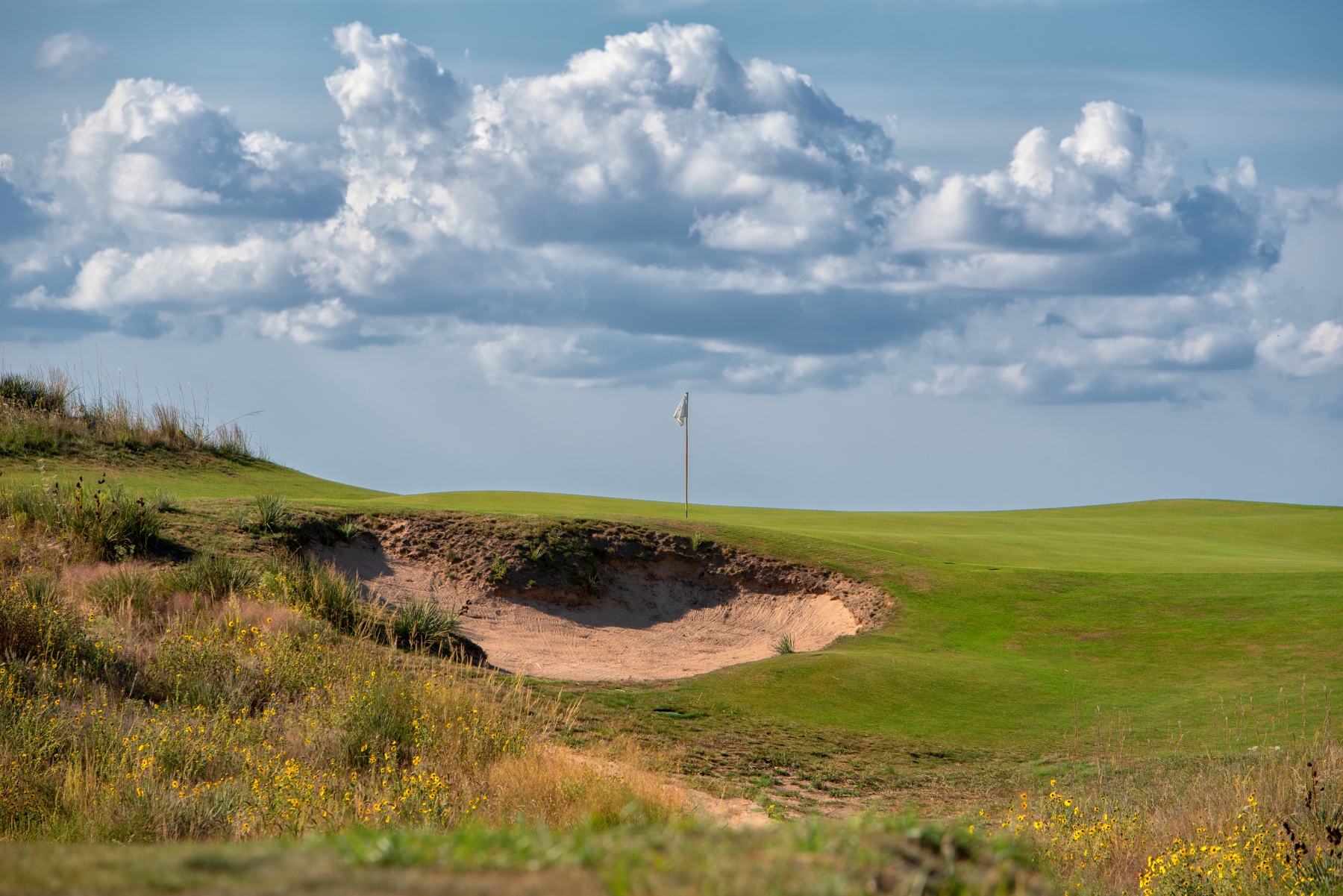
Ballyneal Golf Club is a remote, minimalist links-style course set among the towering sand dunes of eastern Colorado near Holyoke. Designed by Tom Doak, it offers an austere, walking-only experience that evokes the great links courses of Scotland and Ireland. The club also offers the Mulligan Course, a 12-hole par-3 layout designed by Tom Doak in 2016, with holes ranging from 85 to 190 yards across the sand hills.
History
Ballyneal Golf Club sits amid the sand hills of Phillips County, Colorado — an isolated stretch of the eastern Colorado high plains approximately 175 miles northeast of Denver — and represents one of Tom Doak's most complete expressions of American links design on terrain that required almost no earthmoving to achieve extraordinary strategic variety. The project originated with Jim O'Neal, a local golf enthusiast who had recognized the potential of the sand dunes south of Holyoke since approximately 1979. The dunes that local residents called the "chop hills" reminded O'Neal of the dune-covered landscapes of Ireland and Scotland where links golf was born, and for more than two decades he carried the vision of a golf course on that land without the resources to realize it. When his older brother Rupert joined the family-owned hunt club property to the vision, the O'Neal brothers purchased 700 acres from a local farmer in the early 2000s and hired Tom Doak — who had just completed the acclaimed Pacific Dunes course at Bandon — to design a course that would bring genuine links-style golf to the Colorado plains. The commission suited Doak's design philosophy perfectly: here was land that did not need to be transformed, only read carefully and routed with sensitivity to what nature had already made. Doak and his Renaissance Golf Design team studied the 700-acre property for two years before construction began in earnest, walking the terrain extensively to discover the routing that the land's natural features suggested.
The sand hills provided exceptional raw material: natural mounding, hollows, and ridges shaped by wind and time that needed only minimal adjustment to function as fairway corridors and green sites of extraordinary character. The existing fescue and native grasses that blanketed the dunes required almost no planting to produce the playing surfaces Doak intended. Doak struck the first ball in the summer of 2006, and Ballyneal opened that year to immediate acclaim from the golf architecture community, with reviewers describing it as the finest inland links course built in the United States since Sand Hills opened in Nebraska a decade earlier. The design uses the chop hills' natural topography to create a routing of continuous variety. Tee shots must navigate natural mounds and swales that redirect the ball along the ground as much as through the air, and approach shots often play downhill or crosshill to greens set into natural amphitheaters or on exposed ridge tops where the wind is an active strategic variable. The fescue turf produces playing surfaces of exceptional firmness and speed, creating ground-game conditions comparable to classic British links golf on land that is definitively American.
The course plays to a par of 70 and measures approximately 6,800 yards from the back tees, though distance calibration matters far less than the reading of wind, terrain, and the specific angle of approach that the day's conditions require. The course was deliberately designed without any cart infrastructure — caddies are standard — reinforcing the walking character of the links experience Doak sought to create. Ballyneal functions as both a golf club and a hunting operation — the Golf and Hunt Club designation reflects the property's dual purpose as a destination for game bird hunters as well as golfers. Pheasant hunting on the same acreage that frames the fairways gives the property a rural self-sufficiency unusual in American private golf. The club offers overnight accommodations in a modest lodge that complements the remote, nature-focused character of the overall experience. Membership is limited and the club has never actively sought external recognition through championship hosting or media exposure, which has cultivated a reputation built entirely on the quality of what Tom Doak produced on the Colorado plains.
The isolation of Holyoke means that every golfer who makes the journey has come specifically for what Ballyneal offers. Golf Digest has ranked Ballyneal among the top private courses in Colorado since its opening, and it has climbed steadily in national rankings — reaching as high as 34th in Golf Digest's America's 100 Greatest private course rankings. Within Doak's portfolio — which includes Pacific Dunes, Barnbougle Dunes, Cape Kidnappers, and several other internationally acclaimed designs — Ballyneal occupies the position of his most fully realized American inland links: a course that demonstrates how closely the game's Scottish origins can be approximated on terrain that the wind, sand, and fescue of the Great Plains have shaped into something genuinely remarkable. The Colorado Golf Association has repeatedly cited it as the state's most exceptional private course, a recognition that reflects not just the quality of the land but the quality of the architectural thinking Doak brought to it. The course's refusal to publicize itself has, paradoxically, made it more celebrated — golfers seek it out precisely because it has earned its reputation entirely through the quality of play.